






What Is Leash pulling and Why Does It Happen?
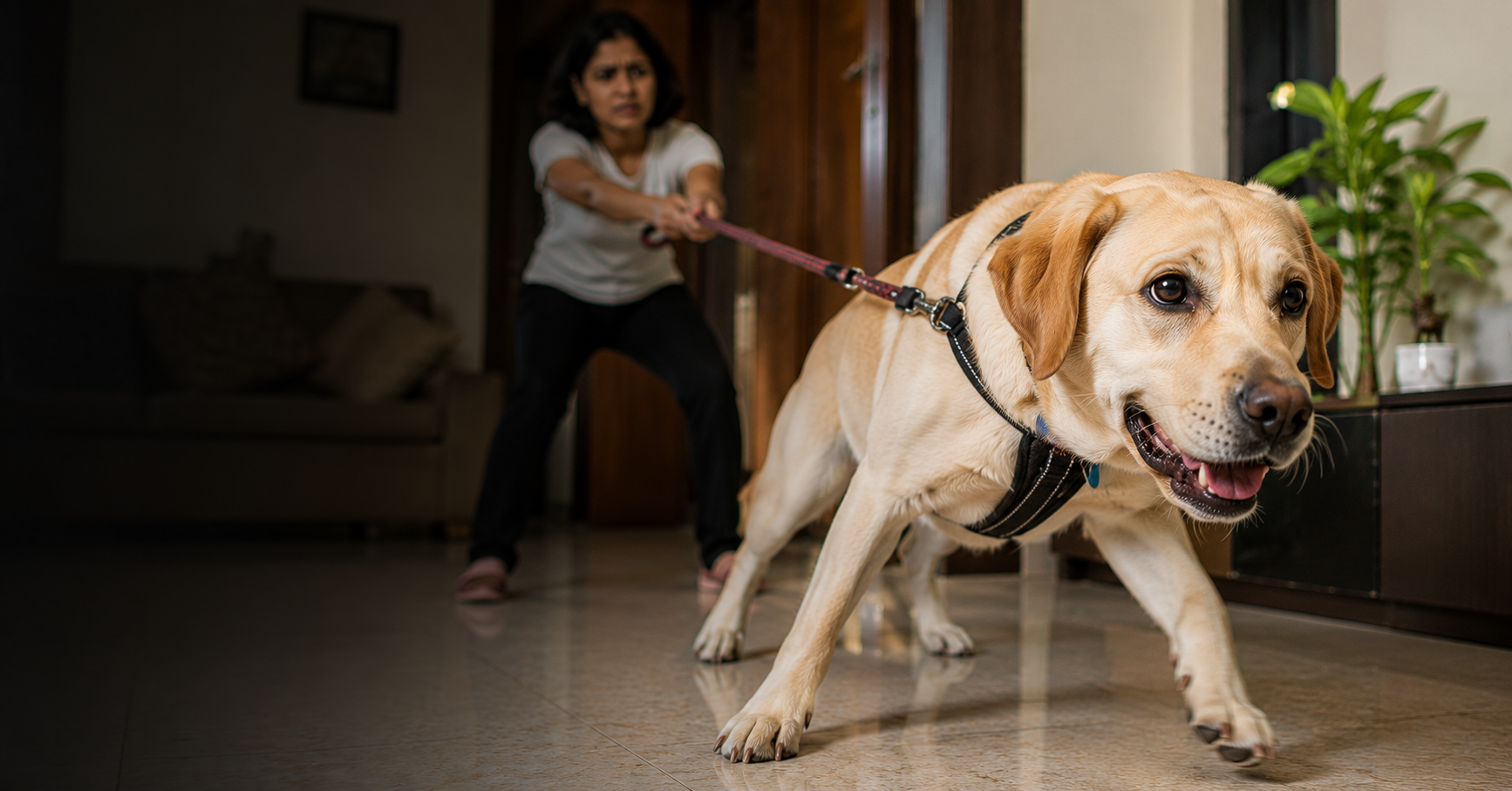
Deepa from Chennai started jogging at 6 AM while following her Labrador dog near Marina Beach but she needed to protect her coffee from spilling because she made the silly choice to bring it along. The dog spotted a stray animal across the street which made her dog pull so strongly that she almost lost her slipper. That’s dog pulling on leash India life right there. The situation has become completely exhausting.
Most dogs pull because walking faster actually works for them. Simple as that. The process involves pulling which results in forward movement. The behavior continues to occur repeatedly. The combination of excitement and frustration and energy and smells and fear creates additional energy in the situation.
A child runs toward the ice cream truck which operates as a similar system. You can shout “slow down” ten times, but excitement wins temporarily. Dogs experience the same outdoor excitement which humans do. People tend to feel more awake when they leave their Indian homes after spending the entire day inside their apartments.
Is Leash pulling Normal in Indian Dogs?
The situation exists under standard conditions. All Indian dog owners will probably face this problem with their pets at some time during their ownership.
The city of Chennai creates difficulties for people who want to teach their dogs proper leash behavior. People face multiple obstacles when walking because they must navigate through narrow sidewalks and encounter stray dogs and hear traffic sounds and experience food odors while scooters operate between them and dogs become easily excited. Dogs who live in apartments face most difficulty because their daily walking time becomes their single chance to explore the outdoors. The dogs show their full energy when they run outside.
Rohan from Chennai had a Labrador who dragged him through the apartment parking area every evening. The man developed shoulder pain because he needed to maintain tight leash control throughout all his dog walking activities. He believed that his dog training efforts would not achieve any success. The situation started to get better when he began teaching his dog with different methods while he also changed their walking path.
Your dog displays this behavior because it lacks respect for you.
The majority of trainers fail to understand this concept at its core. The training method concentrates on fixing dog pulling behavior instead of showing dogs how to walk calmly. Dogs continue their pulling behavior because of their excited state and their learned behavior rather than showing disobedience.
Some Indian breeds and energetic dogs simply need more guidance outdoors. The dog shows normal animal conduct which does not indicate any form of individual deception.
Top Reasons Your Dog Has Leash pulling Problems
The main problem exists because people do not provide enough mental activities for their pets when they stay at home. Dogs spend about ten hours sleeping in their apartments before they activate their energy to its maximum level during their first outdoor walk. A Labrador that stays inside throughout the day will develop frustration because of the Chennai heat. The dog releases all its energy through its leash.
The first problem arises because dog owners unintentionally teach their dogs wrong behaviors. Dogs maintain their position in front of us while we follow their lead. The dog learns that pulling leads to success. I made this mistake myself years ago without realising it. Most people do.
Dogs use pulling behavior to show their nervousness instead of their excitement. Dog owners experience shock when they observe this behavior. Dogs react to traffic and loud bikes and street dogs and crowded roads by increasing their speed because they want to leave dangerous zones more quickly. Multiple factors from Indian streets create major difficulties for dogs who get scared easily.
On the other hand, some fearful dogs respond by freezing or refusing to walk instead of pulling. If your dog won’t move during walks, read our guide on why dogs refuse to walk outside and how to help them. https://petcare360.org/dog-refuses-to-walk-outside-causes-and-solutions/
Dogs need to stop their outdoor activities because of their inability to handle the temperature during these outdoor hours. Chennai experiences periods of severe heat which become unbearable for people to endure. Dogs show restlessness when they spend time outside especially when they have thick coats. People tend to pull their dogs toward shaded areas and water sources and their homes during hot summer nights.
Then there’s one reason nobody expects. Walks are often too short.
Yes, really.
The owners head outside for a quick ten-minute bathroom break before they suddenly bring their dog back inside. The dog learns every second outdoors matters desperately. The dog shows increased pulling behavior because it attempts to obtain maximum excitement during its restricted time.
But here’s the counter-intuitive opinion. Many pet dogs do not need continuous heel walking as their primary training method. I honestly think some trainers expect robotic behaviour from normal family dogs. Dogs need to perform their natural behavior of sniffing at various times throughout the day. Dogs find peace when they explore their surroundings at a slow pace.
Common Mistakes Indian Dog Owners Make With Leash pulling
The biggest mistake is yanking the leash repeatedly. Pull, jerk, pull again. I understand the frustration. I’ve been there too. The practice of using a leash to control dogs actually causes their behavior to worsen because they become more excited or anxious instead of getting calmer.
The daily interactions between people in apartment buildings create this problem throughout the entire week. Owners walk too fast themselves. The dog barely gets time to sniff or process the environment. Then frustration builds and pulling gets worse. The experience of walking should not resemble military drills every time we go outside.
Many Indian dog owners also use retractable leashes because they seem convenient. I really dislike using them for teaching dogs to walk on a leash. Dogs learn that tension will grant them their desired freedom. The method directly causes dogs to increase their outdoor pulling behavior.
Older dogs tend to show this behavior more than younger dogs. The command to say “heel” every three seconds does not produce any beneficial results. Dogs will ignore commands when people use them as continuous background noise.
Owners tend to transform their walks into stressful fights instead of using them for peaceful bonding time with their dogs. The emotional strain moves down the lead at a speed which most people fail to understand.
How to Stop Leash pulling in Dogs – Step by Step
Step 1: Stop Rewarding the Pulling
The new system creates major changes which affect all existing procedures.
The dog needs to stop pulling on its leash before you can start walking again. Don’t yank backward. The body should remain still while you freeze. The dog starts moving again when the leash shows a slight bend.
Your dog learns something simple, loose leash equals movement.
The process feels unreasonably slow at the beginning. Especially in crowded Chennai streets. The speed of your work does not matter because you need to maintain your work routine.
Step 2: Use Better Walking Equipment
Good equipment helps massively.
A front-clip no-pull harness gives far better control without choking your dog during sudden pulling. Good harnesses in India usually cost between Rs. 1,200 and Rs. 3,500 depending on quality.
Avoid thin neck collars for strong pullers. Labradors can accidentally hurt their throat badly while lunging ahead repeatedly.
And please throw away retractable leashes for now.
Step 3: Reward Calm Walking Often
Most owners notice pulling only when things go wrong.
The program shows you how to reward your dog for proper walking every time they walk correctly. The moment your dog walks beside you calmly for even three seconds, praise softly and give a small treat.
Chicken works brilliantly. Tiny paneer pieces too.
My dog achieved perfect walking for fifteen minutes because I carried boiled egg. Slightly embarrassing honestly.
Step 4: Let Your Dog Sniff More
Sniffing reduces pulling surprisingly fast for many dogs.
Dogs experience walks mainly through smell, not distance covered. Dogs need to have time for “sniff breaks” during their walks when they can explore their environment by walking without a leash for about two minutes.
The dog must not follow its nose to discover every scent randomly. There’s a balance.
People should experience better outcomes through controlled freedom than they would under complete restriction or complete chaotic situations.
Step 5: Practice Indoors First
Many owners skip this completely.
The training process becomes more difficult because your dog shows no interest in learning when you bring them indoors for training sessions. Practice leash walking in hallways, parking areas, or quiet terraces first.
Five-minute sessions help a lot.
Start with low distractions. Then slowly increase difficulty over two or three weeks. This builds actual dog obedience instead of temporary control through force.
If you’re looking for a complete daily training plan, read our guide on how to train your dog to walk calmly on a leash in 5 days for a structured routine that builds loose leash walking step by step. https://petcare360.org/how-to-train-your-dog-to-walk-calmly-on-a-leash-in-5-days/
Step 6: Change Your Walking Timing
Timing matters more than people realise.
Busy evening walks in Chennai can overwhelm dogs instantly. Scooters, children, stray dogs, food vendors, everybody is outside together. Early morning walks are usually calmer for leash training.
Less chaos equals better learning.
I noticed massive improvement with my own dog once I stopped training during crowded evening hours.
Step 7: Stay Calm During Mistakes
Your energy affects the entire walk.
The process of dog pulling on leash creates fast-growing tension which leads to your frustration becoming more intense. Dogs observe our breathing patterns and movement as well as the amount we pull on the leash. The dog shows better behavior through calm handling which develops over time.
Stop expecting perfect walks right from the start. Real progress looks messy sometimes.
Some days will continue to feel frustrating to me. That’s normal.
How Long Does It Take to Fix Leash pulling in Dogs?
Usually longer than people hope. But improvement absolutely happens.
The first three days of ownership show most dogs tend to pull their owners during walk times. Awareness changes first. Walks may even feel slower temporarily because you stop rewarding pulling automatically.
By the first week, many dogs begin checking in more often during walks if rewards stay consistent. The pulling force shows a slight decrease. The body gains the ability to recover from distractions at an increased rate.
After one month of steady dog training, most dogs show noticeable improvement in loose leash walking. The walks become more peaceful. Your shoulders hurt less. Your dog focuses better outdoors. But severe dog pulling on leash India cases, especially with young Labradors or high-energy breeds, can take several months to improve fully.
The world presents us with unending challenges. Our single disorganized walk did not remove all the progress we made.
Best Dog Behaviour Training Course for Leash pulling Problems
These steps work well for most dogs. But some dogs need a more structured programme, especially if the being dragged by dog every walk has been going on for weeks or months.
The certified trainer Adrienne Farricelli developed Brain Training for Dogs which uses force-free scientific methods to solve behavior problems at their core.
Want to know whether this programme is right for your dog? Read our honest Brain Training for Dogs review before deciding if it’s a good fit for your training goals. https://petcare360.org/is-brain-training-for-dogs-worth-it-honest-review-2026/
The product has proven effective for more than one thousand dog owners who have tested it.
The training program will help you create better dog walks through its organized approach which will establish a peaceful environment for your daily outdoor activities. The training program includes practical dog training exercises which help dogs develop better focus and emotional control while staying calm in outdoor environments.
The training process achieves better results when people use a no-pull harness together with their training methods because Indian apartments contain multiple sudden distracting elements.
What causes leash pulling in dogs?
Leash pulling usually happens because dogs are excited to explore and learn that pulling helps them reach interesting sights or smells faster. Natural curiosity, distractions, and a faster walking pace also contribute. Consistent loose-leash training teaches dogs that staying close is more rewarding than pulling.
Do dogs know they’re on a leash?
Yes, dogs learn to recognize that a leash means it is time for a walk and they should stay close to their owner. While they do not naturally understand its purpose, consistent training and positive reinforcement help them associate the leash with guidance, boundaries, and enjoyable walks.
Do dogs grow out of leash pulling?
No, most dogs do not outgrow leash pulling on their own. If left untrained, pulling becomes a learned habit because it helps them reach interesting places faster. Consistent loose-leash training and positive reinforcement are the most effective ways to teach calm walking.
How to stop leash pulling in 5 minutes for a puppy?
You cannot stop leash pulling in a puppy within 5 minutes, but you can start teaching better habits right away. Stop walking whenever your puppy pulls, then continue only when the leash is loose. Reward calm walking with treats and praise to encourage good leash manners.
What commands stop leash pulling?
To train your dog to stop leash pulling, focus on teaching them that a loose leash leads to rewards, while pulling stops progress. Start in a calm environment and use a distraction such as a toy or treat placed ahead of your dog. If your dog pulls toward it, immediately stop walking and wait until they return their attention to you or the leash becomes loose. Once they calm down and walk beside you, reward them by allowing access to the toy or treat.
Repeat this consistently so your dog learns that pulling does not help them reach what they want, but calm walking does. Over time, this builds better leash manners and self-control during walks.
How to train to stop leash pulling?
To train your dog to stop leash pulling, focus on teaching them that a loose leash leads to rewards, while pulling stops progress. Start in a calm environment and use a distraction such as a toy or treat placed ahead of your dog. If your dog pulls toward it, immediately stop walking and wait until they return their attention to you or the leash becomes loose. Once they calm down and walk beside you, reward them by allowing access to the toy or treat.
Repeat this consistently so your dog learns that pulling does not help them reach what they want, but calm walking does. Over time, this builds better leash manners and self-control during walks.