






What Is Walk refusal and Why Does It Happen?
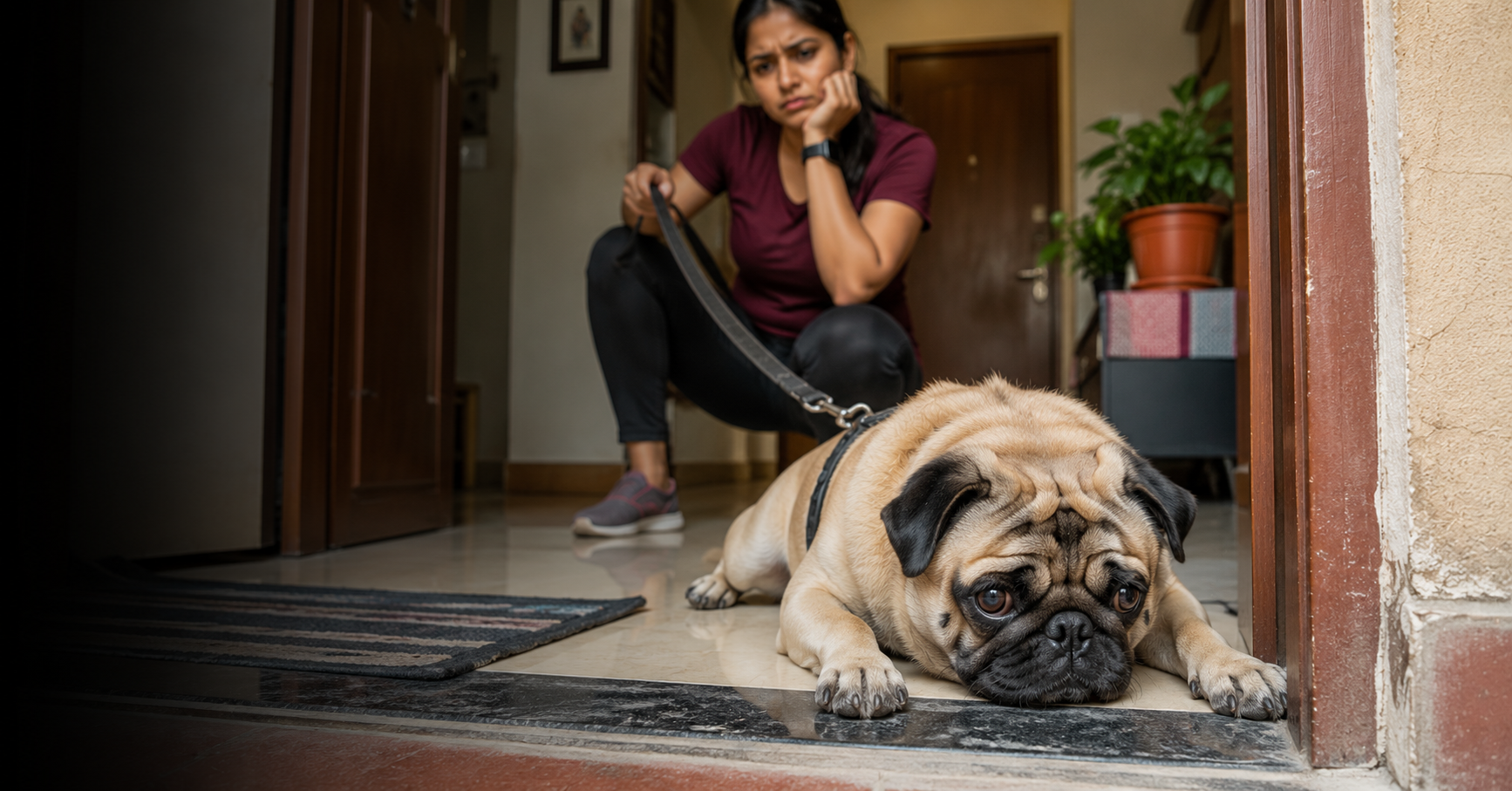
At 7 in the morning, Priya from Mumbai stood near her apartment gate holding a leash while her Pug sat flat on the ground like a stubborn potato. The cars drove past while street dogs barked at their location. Her dog refused to move even one step. She tugged gently. Nothing. She bribed with biscuits. Still nothing. People become fully frustrated when their dogs refuse to walk outside so they start searching for answers about this behavior.
Dogs tend to avoid their walks because they experience negative feelings when they encounter external elements which seem threatening or too intense or cause physical distress. People experience fear at times. People experience pain at times. People become too excited because of traffic and loud sounds and hot weather.
People need to cram into Mumbai trains which already make them anxious while they feel exhausted from their day. Your body resists automatically. Dogs work similarly. The dogs show emotional responses which do not include any deliberate plans to hurt you.
Is Walk refusal Normal in Indian Dogs?
Very normal. Honestly, more common than people realise.
The problem exists for Indian dog owners who live in apartment buildings because their dogs show this behavior as a standard reaction. Mumbai dogs experience nonstop stimulation outdoors. The city produces multiple sounds which include horn blasts and scooter engines and construction equipment. The tight sidewalks host both wandering dogs and people who struggle to control their movements. The situation becomes too much for dogs who have sensitive natures to handle.
Rohan from Mumbai had a Pug who froze every single time they reached the apartment lift lobby. He genuinely thought the dog was being dramatic for attention. The poor guy needed to bring the dog down every day for multiple weeks because no other method succeeded. The situation started to improve because we understood what caused the problem.
You need to understand this isn’t your responsibility to resolve.
Some dogs maintain their natural tendency to stay cautious when they explore outside. Pugs face severe difficulties when they encounter the noisy Indian streets because their small size makes them feel threatened by the vast surroundings. The majority of trainers fail to understand this basic principle. The training methods they use force dogs to confront their fears too rapidly instead of teaching them to develop trust through gradual exposure.
Dogs reveal their underlying stress during walks through their behavior patterns instead of displaying obstinate conduct.
Top Reasons Your Dog Has Walk refusal Problems
The main reason for this situation stems from people’s fear about what they will find when they step outside. The cities across India present an environment which produces extremely high levels of noise pollution. The way dogs process sounds makes them more vulnerable to construction drilling and bike horns and firecrackers and street dog barking which creates an intense fear response. A dog which shows sensitivity to Mumbai apartment life will reach emotional breaking point before the first step of the walk begins.
People encounter various problems when their physical state becomes uncomfortable. People tend to overlook this particular aspect when they make their observations. Dogs which experience joint pain or paw irritation or breathing problems or heat sensitivity will stop walking because their body pain prevents them from moving. Pugs face the worst challenges during humid weather and Indian summers. The dog owner spent thousands on dog training before discovering that the dog’s harness caused painful rubbing which harmed its legs.
The past traumatic events create emotional wounds which people cannot resolve through regular therapy sessions. The ability to trust nature completely disappears after meeting an aggressive stray dog in the wild. Dogs store their emotional experiences in their memory system which produces powerful recollections. The frightening walk from last month continues to create changes which affect how people behave today.
My dog displays an unexpected behavior which I cannot explain. The walks create various types of confusion which disable my ability to maintain any kind of order.
Sounds strange, right?
Owners assume dogs need busy parks and crowded roads for “socialisation.” But many dogs actually feel calmer in quieter environments initially. People who get too much stimulation will shut down their systems instead of becoming more confident.
And here’s my slightly strong opinion. Dogs develop stronger problems when people force them to move through their fear instead of using proper training techniques. Honestly, too many people confuse obedience with emotional comfort. A dog which moves fearfully in your presence shows that it does not remain calm.
Common Mistakes Indian Dog Owners Make With Walk refusal
The biggest mistake is pulling the leash harder when the dog freezes. I understand the frustration. You’re already late for work. The neighbours are watching. Still, dragging usually increases fear because the dog feels physically trapped while already stressed.
Apartment buildings experience regular problems which affect their daily operations. Owners need to take their dogs through scary areas at a slow pace. The elevator doors open to reveal a straight path which prevents me from taking time to observe my environment. Sensitive dogs need slower transitions sometimes.
Most Indian dog owners tend to give their pets too many treats without proper control. The people in the video keep waving their biscuits but the dog remains frozen with anxiety. Food helps only when the dog is calm enough mentally to learn. Severe fear blocks that completely sometimes.
People need to understand that the actual situation works differently than they expect. Modern training methods show no connection between comforting scared dogs through gentle approaches and the development of fear in these animals. Nervous dogs become safer when their owners give them calm reassurance.
I personally believe that many dog owners unintentionally create emotional conflicts during their walks which should serve to build their dogs’ self-assurance. The dogs sense the pressure instantly.
How to Stop Walk refusal in Dogs – Step by Step
Step 1: Identify the Exact Trigger
You need to find the exact point where your dog starts to hesitate before you can start solving their refusal to walk outside.
The area exists near the lift or the apartment gate or the busy road or the locations where stray dogs appear.
Spend three or four days observing patterns while you study them carefully. Keep working toward your goals without rushing. My own dog once refused walks only during evening traffic hours. Morning walks were perfectly fine. Tiny details matter.
Step 2: Stop Pulling the Leash
This changes everything.
You need to stop all leash pulling when your dog shows signs of freezing. Stand calmly nearby instead. The dog needs to spend a few moments without physical contact so it can understand its surrounding environment.
Dogs tend to start moving on their own after the tension between them disappears.
The process starts at a slow pace which creates a frustrating experience. The city produces multiple sounds which include horn blasts and scooter engines and construction equipment. The tight sidewalks host both wandering dogs and people who struggle to control their movements. The situation becomes too much for dogs who have sensitive natures to handle.
Step 3: Build Confidence Indoors First
Many owners skip this completely.
Practice leash walking calmly inside the apartment first. The building contains hallways which connect different parts of the structure to parking areas and terrace spaces. The dog should receive soft praise and treats for every small moment when it shows confidence.
Five-minute sessions work brilliantly.
A dog who feels confident indoors usually transitions outdoors more smoothly over time. This builds real dog obedience instead of fearful compliance.
Step 4: Use Short Outdoor Sessions
Don’t attempt long walks immediately.
The first week requires you to concentrate on achieving small outside accomplishments. I want to reach the apartment gate without any signs of panic. I want to stay outside for two minutes without any signs of panic. The current situation shows that we have started making progress.
Short calm experiences matter more than forced long walks.
The training process becomes more effective for dogs when their owners reduce their constant need to accelerate the learning process.
Step 5: Change the Walking Environment
Busy roads overwhelm nervous dogs quickly.
Choose quieter streets or calmer timings temporarily. The city experiences less disorder during morning hours in Mumbai than it does during busy evening hours when delivery trucks and motorcycles fill the streets. The dogs show improvement after their environment receives a small reduction in stress levels.
The Pug demonstrates two different reactions when it encounters heavy traffic versus when it walks through a peaceful residential street.
Step 6: Reward Movement Naturally
The moment your dog takes even a few relaxed steps outdoors, reward calmly. Tiny chicken pieces work brilliantly. Soft praise helps too.
But don’t shove treats into the dog’s face constantly.
Timing matters more than quantity. Reward confident movement, not frozen panic.
My dog used to walk half a kilometre with confidence because I gave him boiled egg pieces during our walks. The method appears slightly ridiculous but it produces effective results.
Step 7: Use Better Equipment
Some dogs start to resist when they need to use particular collar and harness types.
A lightweight padded harness often feels safer and more comfortable, especially for smaller breeds like Pugs. Good quality harnesses in India usually cost between Rs. 800 and Rs. 2,500 depending on size and material.
Avoid harsh correction collars completely for fearful dogs.
Dogs show behavior changes based on their comfort levels which people tend to underestimate.
How Long Does It Take to Fix Walk refusal in Dogs?
The process takes more time than pet owners expect. But improvement absolutely happens.
Most dogs show decreased resistance during the first three days because owners stop forcing movement constantly. That alone lowers stress significantly sometimes.
Dogs start to explore more confidently during their first week of outdoor sessions conducted in peaceful environments. There might be fewer instances of freezing behavior. The body becomes better at handling loud noises through quicker recovery. The achievement of minor goals holds major importance for this particular situation.
The combination of dog training and reduced house activity during the first month leads to major outdoor dog behavior changes. The walks become less tiring for both dogs and their owners when they spend more time in nature. The process of recovery from severe fear-based cases which cause dogs to refuse outdoor walks because of traumatic incidents will need multiple months to reach full completion.
The process of reaching your goals will include obstacles. Totally normal.
One bad walk doesn’t erase your progress.
Best Dog Behaviour Training Course for Walk refusal Problems
The current process works for most dogs. But some dogs need a more structured programme, especially if the dog sits down and won’t move outdoors has been going on for weeks or months.
Brain Training for Dogs, created by certified trainer Adrienne Farricelli, targets the root cause of behaviour problems using force-free, science-based methods. Thousands of dog owners have used it successfully.
Your dog needs proper outdoor training because they reject walks outside but you can make this time less confusing through organized sessions. The training program contains functional dog training exercises which help dogs develop better confidence and calmness and emotional control when they walk.
The training process will become more effective through harness use because it helps dogs control their body movements which proves beneficial for Pugs who live in congested Indian apartment complexes where they get too much outside stimulation.
Why is my dog suddenly refusing to walk outside?
A dog may suddenly refuse to walk outside due to fear, pain, a stressful environmental change, or a negative past experience. Sudden behavior changes can also indicate an underlying medical problem. If the behavior continues or your dog shows signs of pain, consult a veterinarian promptly.
Should I pull my dog if he refuses to walk?
No, you should not pull a dog that refuses to walk. Pulling can cause pain, increase fear, and create negative associations with walks. Instead, identify the reason your dog has stopped, encourage them with positive reinforcement, and consult a veterinarian if the behavior starts suddenly or persists.
Why is my dog suddenly afraid to go in the backyard?
A dog may suddenly become afraid of the backyard due to a frightening experience, loud noises, pain, or changes in the environment. New smells, construction, or other animals can also trigger fear. If the behavior appears suddenly or continues, have your dog checked by a veterinarian.
What is the 5 second rule for walking dogs?
The 5-second rule for walking dogs helps check if pavement is too hot for their paws. Place the back of your hand on the pavement for five seconds. If it feels too hot to keep your hand there, it is too hot for your dog to walk safely.
Is 2 walks a day enough for a dog?
Yes, two walks a day are enough for most adult dogs when combined with bathroom breaks and daily activity. A routine of one morning and one evening walk helps maintain physical health and mental balance. High-energy breeds may still need extra exercise or playtime.