






What Is Destructive chewing and Why Does It Happen?
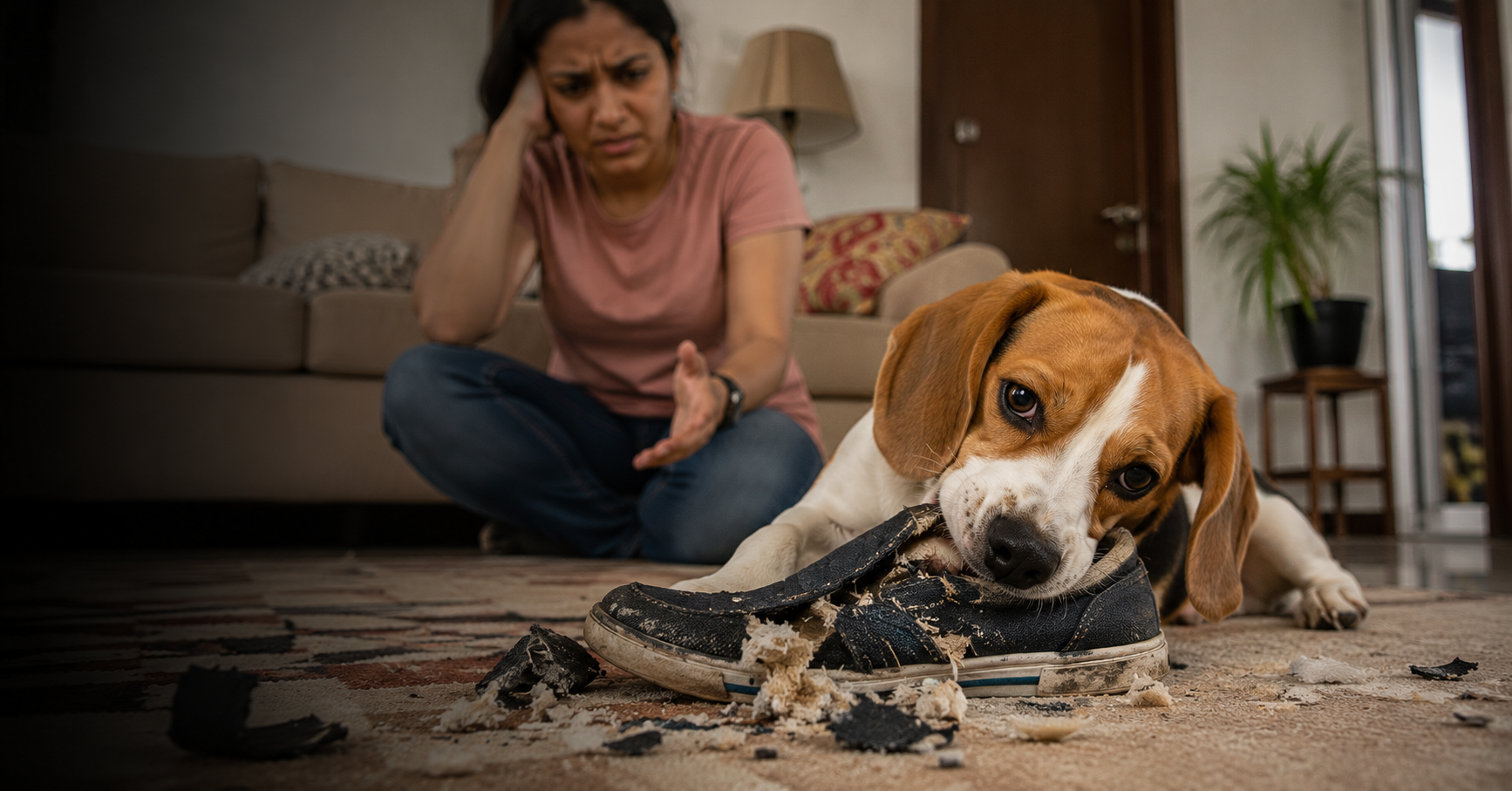
Priya from Hyderabad came home from work, opened her flat door, and just stood there staring at the disaster silently. The owners failed to find any evidence about the missing shoe. The sofa corner looked ripped apart. The entire wooden TV stand showed new signs of dog bites which appeared on its surface. The Beagle dog wagged its tail with pride as it chewed on a cushion cover piece without showing any signs of unusual behavior. She honestly wondered if she adopted a tiny furry carpenter instead of a dog. Her frustration reached such levels that she started looking for an effective dog chewing solution which would save her money during each expensive evening.
Dogs will start destructive chewing when they need to release their accumulated stress and boredom and their teething pain and their active physical energy. It’s not personal. People who experience stress will often bite their nails and they will also tap their feet repeatedly without any conscious awareness of these actions. Dogs perform similar actions through their mouths. Some chew because they’re anxious. People who want to relieve their tension will naturally find comfort through their chewing actions.
Do Indian dogs experience destructive chewing as a usual behavior?
Very normal. Seriously.
The destructive chewing behavior appeared in Hyderabad apartments together with Mumbai flats and Bangalore homes which made owners feel shame because their slippers and cushions seemed permanently broken. Indian dog owners tend to believe their dogs develop major health issues when they show intense chewing behavior. The actual rates for this condition exceed what individuals usually predict.
Rohan from Hyderabad had a Beagle who destroyed headphones, office files, socks, and one expensive cricket bat handle during puppyhood. The poor guy believed he failed at dog training because all objects became damaged within two days of being left untouched in the apartment. The dog needed more excitement because it became bored and it didn’t get enough mental stimulation so it had problems remaining alone.
People who live in apartments tend to chew their things more frequently. Dogs spend long hours indoors hearing noises constantly without enough healthy outlets for energy. People start to treat chewing as their main source of amusement which helps them manage stress while keeping their minds active.
And honestly, some breeds naturally chew more than others. Beagles present with natural curiosity which leads them to use their powerful jaws even though they appear to be adorable little rascals.
Top Reasons Your Dog Has Destructive chewing Problems
One major reason is boredom. Dogs who stay alone in apartments during typical office work hours find ways to entertain themselves. Furniture replacement has become a common recreational activity for people. The human scent in shoes creates strong dog attraction while cushions offer pleasurable ripping experiences and wooden furniture presents dogs with different surfaces to chew on repeatedly.
Teething stands as one of the primary reasons which people encounter most frequently. The constant chewing behavior of puppies between three and six months results from their need to comfort their gums during the transition to adult teeth. I personally experienced losing two phone chargers together with one sandal during that particular time. The situation caused financial pain which I found difficult to handle.
People fail to understand that their stress leads them to chew more than they think. The natural nervous system control of some dogs leads them to chew when they encounter loud apartment sounds and fireworks and when they deal with separation anxiety and visitors and chaotic environments. Most trainers make fundamental errors because they focus on stopping dog chewing instead of handling the emotional distress which leads to this behavior.
A surprising fact exists which makes most Indian dog owners fail to understand the situation. Too much excitement can create destructive chewing too. Dogs who stay overstimulated all day through nonstop play, barking, visitors, and noise sometimes chew afterward simply to release leftover emotional energy.
The extended Indian summer season applies its difficulties to every aspect of life. People need to shorten their outdoor activities because the Hyderabad weather reaches its peak dangerous point during afternoon hours. Dogs remain inside houses for extended periods while they develop restlessness behavior. The evening hours bring about new chewing patterns which lead dogs to destroy furniture and slippers and sometimes they damage walls. Yes, I’ve actually seen wall chewing before. Weird day.
Common Mistakes Indian Dog Owners Make With Destructive chewing
The main error occurs when people punish dogs for their chewing behavior after the event has already passed. Owners come back home to find their furniture destroyed before they begin screaming while showing off their ruined shoes as if they were evidence from a legal case. Dogs usually don’t connect your anger to the earlier chewing at all.
The practice of giving dogs free access to interesting objects at all times represents a common error which people make. Shoes near doors. Chargers hanging beside sofas. Kids’ toys scattered everywhere. Dogs naturally chew whatever stays easily available during boring hours.
Numerous Indian dog owners believe that buying a single random chew toy will solve all their problems for good. The system does not operate according to this pattern. Dogs lose interest in their toys after a short time because they need mental challenges to keep their minds active.
People who want to stop their chewing behavior completely make the worst error in my opinion. Dog chewing behavior remains normal and does not represent bad conduct. Dogs require protected chewing materials which help them reach emotional stability and achieve relaxation. People should focus on teaching dogs to chew differently instead of trying to make them stop chewing altogether. The two situations present a complete transformation that separates them from each other.
How to Stop Destructive chewing in Dogs – Step by Step
Step 1: Identify the Chewing Trigger
Before you make any changes you need to observe the situation carefully.
Some dogs chew only during alone time. Other dogs choose to damage furniture after they return from their walks and following their times of stress and their typical evening play sessions. Begin your observation process by spending multiple days to identify patterns because dogs show chewing behavior in response to their emotional states.
My Labrador used to chew cushions specifically after visitors left the apartment. Strange little stress response, honestly.
Step 2: Remove Tempting Objects
Management matters massively here.
Pick up shoes. Hide wires. Close bedroom doors. Use baby gates temporarily if needed. Preventing bad chewing habits helps dogs succeed faster instead of constantly rehearsing destructive behaviour daily.
Rohan from Hyderabad started storing slippers inside cupboards instead of near the entrance. Small change. Huge improvement later.
Step 3: Offer Better Chewing Alternatives
Dogs still need chewing outlets every single day.
People need to keep their dogs busy with different textures and protected chew toys which they must provide regularly. Rubber toys together with frozen carrots and rope toys and safe chew bones serve as excellent solutions for most dogs. The cost of good quality chew items ranges between Rs. 300 and Rs. 1,000 which proves to be more affordable than what people spend on replacing broken furniture all the time.
And frozen chew toys help wonderfully during hot Indian summers too.
Step 4: Increase Mental Stimulation
Mental exercise reduces chewing surprisingly fast.
Practice short dog obedience sessions indoors. Hide treats around rooms. Use puzzle feeders during meals. People can play sniffing games inside their apartments when rain or hot weather prevents them from going outside. Ten minutes of brain work often tires dogs more effectively than another rushed walk.
The mental stimulation I provided my dog led to more behavioral changes than any expensive training equipment could achieve.
Step 5: Teach Calm Alone Time
Some dogs chew mainly from stress.
Practice short calm departures daily without emotional goodbye scenes. Start your dog alone time journey with five-minute sessions which include safe chew items within reach. Then slowly increase duration over time. The situation demands well-organized routines for its solution.
The process of separation-related chewing prevention needs more than an instant solution to succeed. The entire process needs people to show their patience.
Step 6: Reward Good Choices Immediately
Catch your dog chewing the correct item.
Your dog deserves calm praise which you should give right after they choose their chew toy instead of damaging furniture. Dogs develop better when their positive actions receive regular attention which they can count on.
Tiny moments matter a lot.
Many owners only react during mistakes while completely ignoring calm appropriate chewing happening naturally nearby.
Step 7: Create Structured Daily Routines
Dogs achieve mental stability through their regular daily routines.
Dogs who have fixed schedules for their walks and meals and training sessions and rest periods tend to show less damaging behavior when they stay inside their home. Dogs who live in apartments show better adaptation when their daily activities follow a planned schedule instead of having random and unpredictable patterns.
My Beagle found better peace through organized daily activities than he ever did from taking extended walks.
How Long Does It Take to Fix Destructive chewing in Dogs?
The reasons which lead to chewing behavior will determine how long the treatment process will take.
Your dog will continue to attack furniture during the first three days because their previous habits still seem natural to them. That’s normal. You should start introducing new routines to your dog in a slow and steady way.
Dogs start to show interest in chew toys during their first week of life when they receive proper control and mental activities. Maybe fewer slippers disappear suddenly. Small progress counts here.
After one month of steady dog chewing everything solution training, most dogs improve noticeably if boredom, stress, or teething caused the behaviour originally. Severe separation anxiety cases usually take longer though.
Stick with the process.
Your dog probably isn’t trying to destroy your home maliciously. The current method of their needs fulfillment leads to wrong behavior. Big difference there, honestly.
Best Dog Behaviour Training Course for Destructive chewing Problems
The procedure works for most dogs when you follow these steps. The program requires dogs to follow a particular training plan which helps them stop destroying shoes and furniture when this problem persists for more than two weeks. The Brain Training for Dogs program which I recommend comes from Adrienne Farricelli who holds a certified trainer credential. The method addresses dog behavior problems at their source through scientific approaches which use positive methods instead of using threats or physical punishment.
The system has helped thousands of dog owners who used it to control their dogs’ chewing behavior and barking and separation anxiety and impulse control issues. The training process becomes more effective when you use a chew toy during sessions because dogs need dedicated chewing areas which help them manage their stress every day. Some dogs show improvement at a slow rate. Others suddenly leave your furniture alone one day and proudly chew their own toy instead. Feels oddly emotional when that finally happens.
How do I get a dog to stop chewing on everything?
To stop a dog from chewing everything, manage their environment and provide appropriate chew toys. Redirect them to approved items whenever they chew something unwanted and reward good behavior. Make sure your dog gets enough exercise and mental stimulation, as boredom or anxiety often leads to destructive chewing. Consistency is key for long-term improvement.
At what age will my dog stop chewing everything?
Most dogs reduce destructive chewing between about 6 months and 2 years of age, after teething ends and they mature. However, chewing is a natural behavior and may continue if a dog is bored, anxious, or under-exercised. Providing chew toys, training, and mental stimulation helps manage it at any age.
Do dogs grow out of chewing?
Dogs usually grow out of intense teething-related chewing by around 6 to 18 months of age. However, chewing is a natural lifelong behavior and may continue for enjoyment, stress relief, and mental stimulation. Destructive chewing can be managed with training, chew toys, and exercise, but the need to chew never fully disappears.
What smell do dogs hate to stop chewing?
Dogs often dislike strong smells like citrus (lemon, orange), vinegar, and bitter sprays, which can help discourage chewing. However, effectiveness varies from dog to dog. For best results, combine deterrent smells with training, supervision, and appropriate chew toys.
Are dogs happy when they chew?
Yes, dogs are often happy when they chew because it is a natural behavior that helps relieve stress, boredom, and anxiety. Chewing also provides mental stimulation and comfort. However, it becomes a problem if they chew inappropriate items, so safe chew toys and proper exercise are important.