


What Is Food and toy guarding and Why Does It Happen?
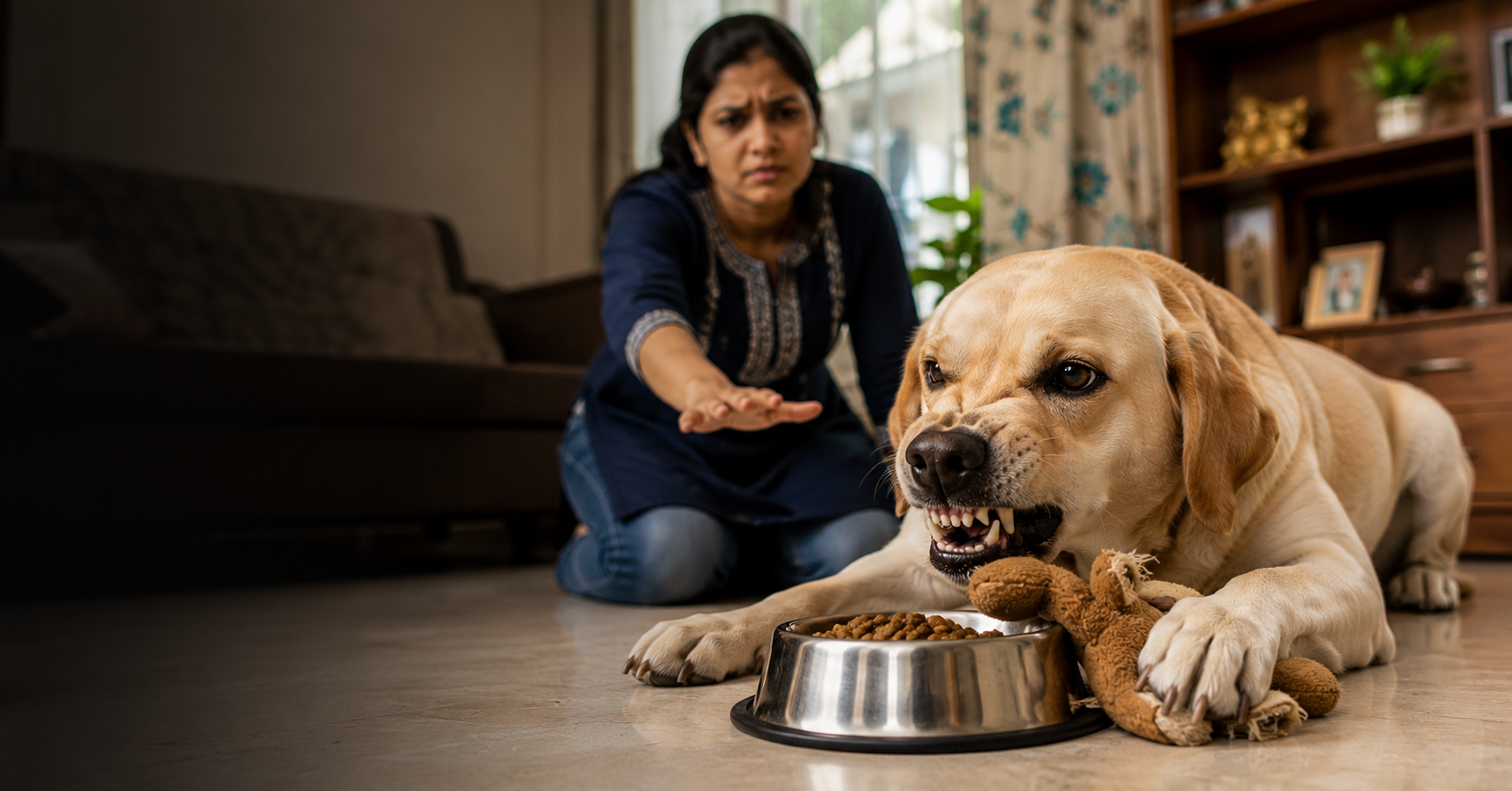
Priya from Hyderabad bent down to move her Labrador’s food bowl away from the living room doorway and suddenly heard a deep growl. The dog made a sudden snap at her hand before she could properly respond to the situation. She immediately drew back with shock while experiencing both physical and emotional pain. Dog resource guarding behavior begins to appear in typical household environments. Fast. Unexpected. Scary.
Dogs protect their belongings because they become afraid about losing their important possessions. Food. Toys. Beds. Even favourite humans sometimes. People demonstrate these behaviors because they don’t intend to act badly or show stubbornness. Someone would need to take your phone or wallet from your hands when you use them. The first reaction of most people will be anything but peaceful.
Dogs use growling as their primary method to communicate with others. The biting behavior appears after dogs fail to respond to their initial warning signals.
Is Food and toy guarding Normal in Indian Dogs?
Yes, very normal. Especially in Indian homes where space is limited and routines can feel chaotic for dogs sometimes.
The practice of Indian dog owners who reside in apartments leads to unintentional development of gradual guarding behavior in their pets. Dogs eat near crowded kitchens. People keep moving around all the time. Relatives visit often. Food smells fill the house all day. Dogs in Hyderabad apartments face constant noise which prevents them from enjoying peaceful rest.
Rohan from Hyderabad had a Labrador who growled every time someone approached his chew bone near the sofa. The man believed his dog developed aggressive behavior out of nowhere. The man started to prevent any visitors from entering his living area because he felt ashamed of himself. The man understood dog resource guarding better when he learned that the dog showed this behavior because it felt insecure.
Your past actions do not bear any responsibility for this situation.
Dogs show different levels of protection when it comes to their valuable items. Guarding behavior emerges in dogs which include rescue animals from Indian streets and street Indies and Labradors who receive full pampering. Trainers in the field show no understanding about this concept. The training methods used by these trainers show dogs to display dominance instead of teaching them to view human presence as a signal for positive experiences.
Top Reasons Your Dog Has Food and toy guarding Problems
The main factor which causes this problem stems from how people feel about their belongings. Dogs who experienced competition during puppyhood often guard more intensely later. Rescue dogs from Indian streets sometimes had to fight for food daily before adoption. People fail to understand how long these memories continue to shape dog behavior.
People unintentionally create problems because they make mistakes which humans cannot avoid. Owners take their belongings away from their dogs at all times to demonstrate proper behavior. Bone gone. Toy removed. Bowl lifted suddenly. The dog learns human arrival brings loss but it continues to develop this knowledge during its lifetime. The dog starts to show defensive behavior through its silent signals.
The crowded apartment environment creates conditions which make dogs increase their need for protection. A dog attempting to rest with a toy while children play and family members continue to walk past him throughout the night would probably stay anxious the entire time. Hyderabad apartments experience fast rising noise levels which people create during festival celebrations and when families come together. People become less able to wait because stress makes them lose their ability to wait.
People underestimate how heat impacts the way animals behave. The extreme heat of Indian summers makes dogs become more aggressive. A Labrador lying near the cooler with his favourite chew may react more sharply when disturbed because he already feels physically uncomfortable.
The situation contains an unexpected reason which people have not predicted. People need to feed their dogs through hands at times which exceed the necessary amount.
The situation appears unusual.
People believe that feeding dogs by hand will create better bonds between them and their dogs while improving their obedience. But with some anxious dogs, constant hand control around food actually increases emotional tension. The dog directs its entire attention to human-managed food entry points instead of developing proper food security which would let it eat peacefully on its own.
But here’s my slightly strong opinion. Social media dog advice has made resource guarding worse for many owners. Too many videos encourage people to test dogs constantly around food bowls just to “prove trust”. Honestly, that’s irresponsible sometimes.
Common Mistakes Indian Dog Owners Make With Food and toy guarding
The biggest mistake is punishing the growl. A dog growls near food, someone yells or taps the nose. Now the warning system becomes unsafe. The dog will bypass its usual growling phase to launch an immediate biting attack during its next attack. That’s far more dangerous.
If your dog’s warning behaviour has already progressed beyond growling, read our guide on dog growling and snapping at family members to understand the causes and what to do next.
https://petcare360.org/dog-growling-and-snapping-at-family-members/
Another common problem happens in homes with children. Parents encourage kids to touch dogs while eating because they want the dog to become “used to it”. Terrible idea for many dogs. All dogs need their own peaceful eating space where no one should touch their food bowl during their meal.
Owners frequently take items from their dogs by force when they try to get their dogs’ mouths. Shoes. Socks. Chicken bones stolen from the kitchen. I understand the panic. I’ve done it myself once. But repeated grabbing creates mistrust fast.
And here’s the counter-intuitive truth. Your dog will show more food-related resource guarding behavior when you test their food tolerance instead of reducing it. Dogs don’t need daily “proof exercises” while eating.
Most Indian dog owners fail to recognize that dogs need obedience training instead of emotional comfort according to my personal opinion. A dog obeying fearfully isn’t actually relaxed underneath.
How to Stop Food and toy guarding in Dogs – Step by Step
Step 1: Identify What Your Dog Guards
Not all dogs guard the same things.
Some protect food bowls. Others guard beds, toys, stolen socks, or favourite sleeping spots. Dog training requires observation of behavior patterns for multiple days before you can start the process.
My own dog never cared about food but became weirdly dramatic over one rubber ball. Dogs are strange sometimes.
The system requires absolute clarity which stands as the most essential element.
Step 2: Stop Taking Things Away Randomly
This changes everything.
The dog will learn to defend its valuable possessions more effectively when people keep taking their important things away. Instead of grabbing suddenly, start trading fairly. The process involves giving chicken and paneer or other valuable items to the dog before you take the object away from it.
The dog learns, “Humans approaching means better things happen.”
People with dogs need to understand their emotional changes because these emotions affect how they protect their resources.
Step 3: Create Calm Feeding Routines
Feed your dog in a quieter area of the home for two to three weeks. No children nearby. No crowding. No touching during meals.
The kitchen area in India rapidly turns into a disorganized space when people start making dinner. Your dog doesn’t need people stepping around the bowl constantly.
Predictability lowers stress.
Yeah it seems really easy. The method of calm routines proves to be quite effective.
Step 4: Teach Positive Human Approaches
Walk near your dog calmly while he eats and toss better treats from a distance initially. Don’t hover. Don’t stare. Just pass by casually and drop something tasty.
Chicken works brilliantly here. Tiny pieces only.
People begin to link human presence with reward delivery instead of resource depletion. This process takes patience though. Don’t rush it.
Step 5: Practice “Trade” Commands Daily
Teach your dog that giving something up doesn’t end badly.
Use low-value toys first. Offer a treat. Say “trade.” When the dog releases the item, reward immediately and sometimes even give the toy back after a few seconds.
That last part surprises people.
People need to return their toys to reduce their fear of losing their belongings forever. Most trainers fail to teach this skill to their students.
Resource guarding improves through consistent, reward-based practice rather than quick fixes. If you’re looking to build a stronger training routine, read our guide on How to Train Your Dog at Home: Tips and Techniques for practical methods you can use every day.
https://petcare360.org/how-to-train-your-dog-at-home-tips-and-techniques/
Step 6: Manage Children Carefully
Children and guarding dogs need structure around interactions.
Teach kids never to disturb sleeping or eating dogs. No hugging during chew time either. One Hyderabad family reduced snapping incidents massively simply by adding physical space between their child and dog during evening snack times.
I know this feels inconvenient initially. Safety comes first though.
Students occasionally bite even though they have not displayed any prior behavior problems.
Step 7: Use Better Feeding Tools
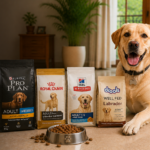
The slow feeder bowls help dogs find peace during their meals because this method creates a better eating experience which prevents them from rushing their food consumption. The typical price range for quality bowls in India falls between Rs. 500 and Rs. 1,500 based on their dimensions and construction materials.
Lick mats help too sometimes.
Multiple dogs at the same time require owners to avoid feeding situations which have too many dogs present. The establishment of separate living areas brings substantial reduction in residential stress to people who live in apartments.
Management stands as an effective approach to handle dog behavior instead of representing a failure.
How Long Does It Take to Fix Food and toy guarding in Dogs?
The process of progress emerges through slow development instead of instant transformation.
During the first three days, most owners mainly notice reduced tension because they stop triggering guarding accidentally. The process enables dogs to achieve faster relaxation through this single method.
The first week brings dog responses to trade exercises and calm feeding routines. The growling noise becomes softer while the dogs show better ability to handle their reactions.
After one month of consistent dog training, many dogs show noticeable improvement around food and toys. Human approaches feel less threatening. Recovery after stress becomes quicker. But severe dog resource guarding cases involving biting can take several months, especially if the behaviour existed for years.
For dogs that show serious aggression around food, toys, or other valuable items, our guide on How to Handle an Aggressive Dog Safely at Home explains how to keep everyone safe while you work through the training process.
https://petcare360.org/how-to-handle-an-aggressive-dog-safely-at-home/
And setbacks happen occasionally. Completely normal.
One rough incident doesn’t erase all progress your dog has made.
Best Dog Behaviour Training Course for Food and toy guarding Problems
These steps work well for most dogs. But some dogs need a more structured programme, especially if the dog bites when approached near food has been going on for weeks or months.
Brain Training for Dogs, created by certified trainer Adrienne Farricelli, targets the root cause of behaviour problems using force-free, science-based methods. Thousands of dog owners have used it successfully.
If you’re dealing with dog resource guarding daily, structured guidance can make home life feel calmer and far less stressful. The programme includes practical dog training exercises that improve trust, emotional control, and safer dog behaviour around food and toys.
Using a slow feeder bowl alongside the training can also make a real difference, especially for Labradors and fast eaters living in busy Indian apartment homes.
At what age does resource guarding start?
Resource guarding can start as early as 3–4 weeks of age, but it is most commonly seen in puppies between 6 and 10 months. It can also develop later in life due to fear, stress, pain, or environmental changes. Early training and proper socialization help reduce the risk.
How serious is resource guarding?
Resource guarding can be a serious behavior issue if not addressed early. Dogs may growl, snap, or bite to protect food, toys, or other items, which can pose risks to people and other pets. Without proper training, the behavior may worsen over time, but early intervention and positive reinforcement can help improve it safely.
Is resource guarding permanent?
Resource guarding is not always permanent. Many dogs improve with early training, positive reinforcement, and consistent management. In some cases, especially mild ones, the behavior can reduce significantly over time, while more severe cases may require ongoing management and professional guidance.
Can resource guarding be cured?
Resource guarding can often be improved, but it is not always completely cured. Since it is a natural behavior in dogs, training focuses on changing how the dog feels when someone approaches their valued items. Positive reinforcement and gradual desensitization can lead to strong improvement, especially with consistent practice or professional help.
How do I break my dog from resource guarding?
To reduce resource guarding, teach your dog that your approach brings positive experiences. Reward calm behavior when you come near their food or toys, and avoid taking items by force or punishing growling. Use gradual training to help your dog stay relaxed, and seek professional help if the behavior includes snapping or biting.
What is the best approach for resource guarding?
The best approach to resource guarding is positive reinforcement training. Teach your dog to trade valued items for treats, which helps build trust and reduces defensive behavior. Avoid punishment, as it can increase fear and make guarding worse over time.