







What Is Sound-triggered barking and Why Does It Happen?
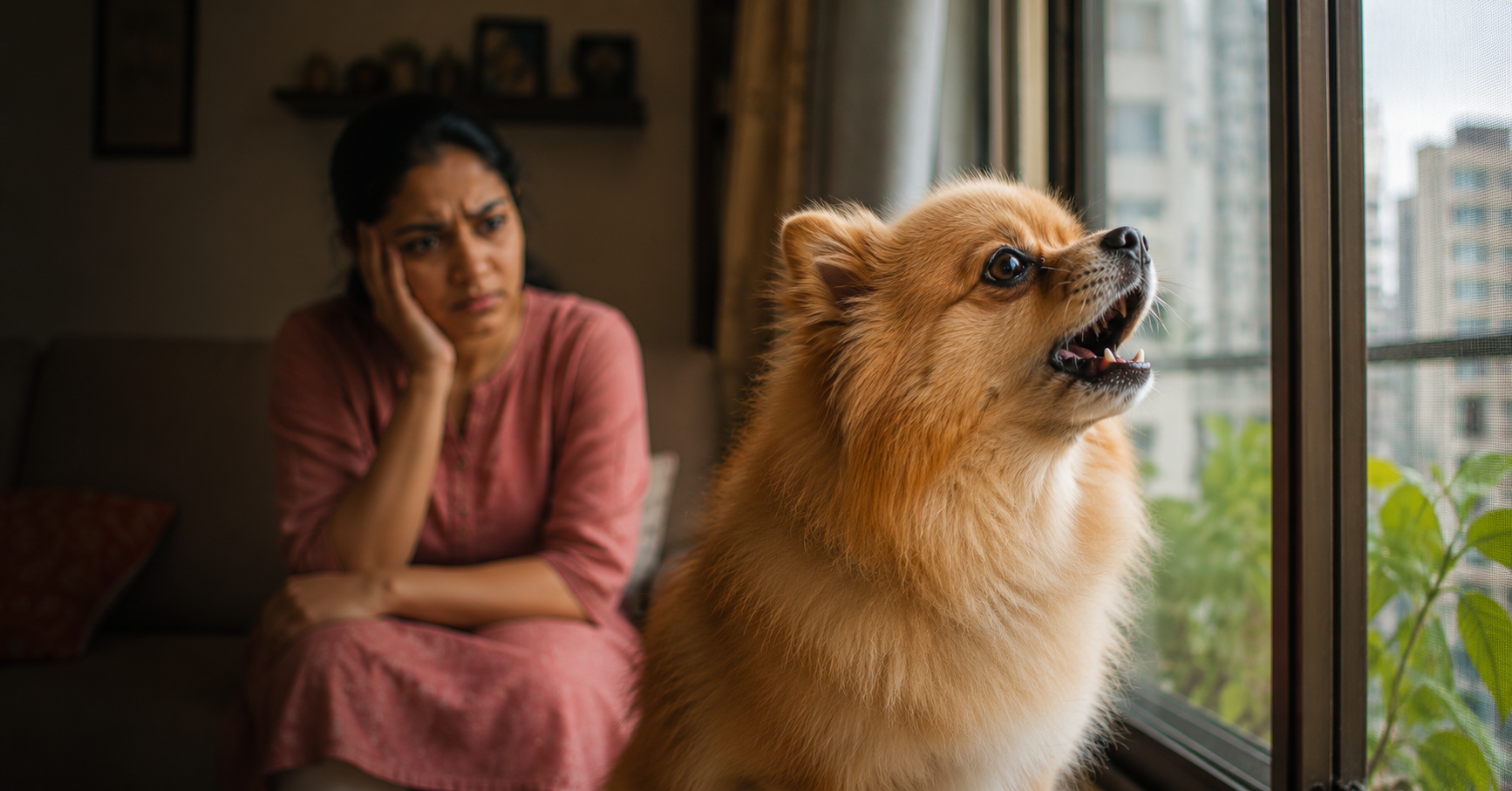
The lift door opened outside the flat in Hyderabad and the Pomeranian inside exploded into barking again. The sound of a scooter passing under the building triggered another round of barking from the dogs. The neighbor’s kitchen pressure cooker whistle sounds through my window which makes the dogs start barking. Dogs who bark at all sounds create an environment which becomes difficult for apartment residents to handle.
Most dogs aren’t trying to irritate you. The dogs react automatically to sounds which their brains register as important. Some dogs feel nervous. Others get overexcited. A few genuinely believe they’re guarding the family from every tiny sound outside the door. Dramatic little creatures sometimes.
Imagine a phone which keeps its notification volume at the highest possible level. Your dog treats every sound as if it were an emergency even though all of them pose no danger. The situation becomes worse because Indian apartments generate nonstop background noise which includes lift sounds and vendor calls and bike engines and children’s play and various corridor echoes.
Are Indian dogs known to bark when they hear sounds?
Yes. Very normal.
Many Indian dog owners quietly deal with this every single day, especially in apartments and flats where dogs hear nonstop movement around them. The apartment structures in Hyderabad become noisy very quickly. Delivery boys ring bells constantly. Scooters rev outside. Neighbours drag furniture at odd hours for some reason. Dogs notice everything.
You’re probably wondering if caused this somehow. Most people do. But honestly, this problem happens even in loving homes with good dog training and regular walks. Some dogs are simply more sensitive to sound than others.
Rohan from Hyderabad had a Pomeranian named Coco who barked whenever somebody entered the corridor outside his flat. He genuinely thought he failed at dog obedience training because the barking never fully stopped. The continuous apartment noise baffled Coco because he failed to develop proper relaxation methods for indoor settings.
The situation began to improve after Rohan adjusted Coco’s daily tasks while he kept his cool during every barking incident. Not instantly though. That part matters.
Top Reasons Your Dog Has Sound-triggered barking Problems
The main problem occurs because people receive too many sensory inputs. Indian apartment life gives dogs very little mental quietness. Your dog hears pressure cookers, lift alarms, vendors yelling outside, TV sounds through walls, bikes, temple loudspeakers, and children running in corridors. The nervous system stays alert constantly.
Fear also plays a huge role. Many barking dogs actually feel uncertain or anxious underneath all that noise. Your dog uses barking to protect itself from scary noises according to its mental understanding. Small breeds like Pomeranians and Spitz dogs often bark louder because they feel physically vulnerable inside busy environments.
The problem arises because animals do not receive enough appropriate mental stimulation. The summer season in Hyderabad creates an intense environment which drains human energy. The extreme heat after 10 am makes people shorten their walking distances. Dogs spend most of their time inside so they develop more energy which makes them react to every noise they encounter.
But here’s something most owners don’t expect. The training process of excessive obedience work leads to new barking problems which appear as treatment side effects. The sound pattern seems unusual to me. Owners tend to use “quiet” and “sit” and “stay” commands when their dogs become stressed but they fail to teach their dogs proper emotional control. The dog follows commands for a short period before it experiences a mental explosion.
Honestly, most trainers get this completely wrong. The team puts their focus on dog control instead of working to create safe environments for dogs to face their sound trigger fears.
Indian breeds like Indies and Rajapalayams are naturally alert too. Their brains notice movement and sound quickly because that awareness historically helped them survive. The urban nature of apartment living establishes conditions which push people to develop their survival instincts.
Common Mistakes Indian Dog Owners Make With Sound-triggered barking
One mistake is shouting back. I did this myself years ago with my first dog and it achieved absolutely nothing except more noise inside the flat. Your dog often thinks you’re joining the barking instead of stopping it. Energy rises. Barking gets louder. Wonderful cycle, honestly.
The wrong timing of dog comfort creates a new problem. Owners immediately approach to pick up their dogs before hugging them tightly and beginning frantic conversations following every barking incident. I understand why people do this. The method triggers nervous behavior because animals receive their attention while they experience panic.
People also expect too much too quickly. They try one dog training method for four days, then switch to another random YouTube trick because barking still happens occasionally. Sound-triggered dog behaviour changes slowly through repetition and routine, not shortcuts.
And here’s the mistake many owners think is correct. The process of exposing your dog to loud noises does not help because it actually makes them more sensitive to sounds. The process of flooding nervous dogs with nonstop triggers results in major negative consequences.
That part surprised me too.
How to Stop Sound-triggered barking in Dogs — Step by Step
Step 1: Identify the Exact Sound Trigger
Spend three days observing carefully.
Your dog barks when it hears lift sounds and footsteps and scooters and doorbells and pressure cooker whistles. Most owners think their dog reacts to everything equally, but specific noises usually trigger the strongest reactions.
My neighbour’s Pomeranian ignored traffic completely but barked wildly at keys jingling outside apartment doors. Tiny detail. Huge difference.
The training process becomes more efficient and targeted when you discover the actual factors which lead to dog behavior problems.
Step 2: Reduce Noise Exposure Indoors
Indian apartments create excessive noise for dogs who have sensitive hearing.
Close balcony doors during peak evening traffic. Use curtains near windows facing busy roads or corridors. White noise from a fan or machine can soften sudden sounds surprisingly well. Even simple background music helps some dogs relax indoors.
The solution only hides the problem for a short period. The process decreases your stress levels while you develop better habits through gradual steps.
The reduction of continuous noise exposure leads to better behavior in people within seven days.
Step 3: Reward Calm Behaviour Immediately
Timing matters a lot here.
The dog receives its first reward when it hears any sound but remains completely still. The small chicken fragments create an excellent base for this dish. Soft praise helps too. Your dog slowly learns that silence and relaxation create good outcomes.
Most owners only react after barking starts. That’s already too late because the emotional response has taken over.
I spent 10 minutes daily rewarding calm reactions near corridor sounds with my own dog. Small sessions changed everything over time.
Step 4: Stop Creating Extra Excitement
The way you respond creates stronger effects on your dog than you probably understand.
When barking starts, avoid rushing dramatically toward windows or doors. Don’t yell. Don’t panic. Move calmly and speak softly instead.
The emotional reactions which Indian dog owners produce when they hear outside noises seem to strengthen their dogs’ excitement levels.
But calm energy spreads too. Dogs notice that quickly.
Reward silence whenever it appears, even if it lasts only three seconds initially. People do not understand the value of small peaceful moments which exist in our lives.
Step 5: Practice Controlled Sound Training
Random exposure rarely works well.
Use low-volume recordings of common sounds like doorbells, scooters, or footsteps for five-minute sessions. Keep the volume soft enough that your dog notices the sound without barking. Reward calm reactions consistently.
Rohan practiced this with Coco using corridor noise recordings during Hyderabad afternoons when the building stayed quieter. Within three weeks, Coco stopped reacting to many everyday sounds completely.
Progress looked messy sometimes though. Some days felt worse before things improved.
That’s normal.
Step 6: Increase Mental Exercise Daily
Mental stimulation changes dog behaviour massively.
Physical walks alone aren’t enough for many dogs living in flats. Nose games, puzzle feeders, search games, and short obedience exercises tire the brain differently. Pomeranians especially benefit from mentally engaging activities because they stay alert naturally.
Hyderabad summers limit outdoor activity anyway. Indoor enrichment becomes much more important during hot months when dogs spend extra hours inside apartments.
Twenty focused minutes daily can reduce evening barking noticeably.
Step 7: Stay Consistent for One Full Month
Most people give up too early.
Your dog probably practiced barking at sounds for months already. Maybe longer. Expecting complete silence after one weekend isn’t realistic.
Behaviour change happens through calm repetition. Not frustration.
You’ll usually notice small improvements first. Shorter barking episodes. Faster recovery after noises. Less panic near doors or windows. Those little signs matter more than perfect silence immediately.
And honestly, consistency beats fancy training methods almost every time.
How Long Does It Take to Fix Sound-triggered barking in Dogs?
The first three days usually feel frustrating because your dog still reacts automatically to familiar sounds. Don’t panic during this stage. The old habit feels deeply wired into the brain initially.
Dogs start to recover more quickly from their barking episodes during the first week after treatment begins. The dogs stop their continuous barking after a few minutes to begin following your commands.
Dog training becomes effective after one month of training because dogs develop better daily behavior. The sounds now sound less intense. Your dog relaxes more indoors. The entire community experiences a peaceful environment through apartment life.
Some dogs improve faster. Others take longer, especially anxious rescue dogs or naturally alert breeds. But steady progress matters more than speed. Always.
Best Dog Behaviour Training Course for Sound-triggered barking Problems
These steps work well for most dogs. But some dogs need a more structured programme, especially if the dog alarmed by any noise has been going on for weeks or months.
Brain Training for Dogs, created by Adrienne Farricelli, targets the root cause of behaviour problems using force-free, science-based methods. Thousands of dog owners have used it successfully.
Check it out here: Brain Training for Dogs
Using a white noise machine alongside the training can also make a real difference, especially in noisy Indian apartments where sudden sounds happen constantly throughout the day. But patience matters too. Your dog isn’t trying to embarrass you or annoy your neighbours. They’re usually overwhelmed
Is it normal for dogs to bark continuously?
Occasional barking is normal for dogs, but continuous or excessive barking is not. It usually indicates an underlying issue such as boredom, anxiety, territorial behavior, or discomfort. Identifying and addressing the root cause helps reduce constant barking effectively.
Why does my dog bark at the slightest noise?
Dogs often bark at slight noises due to their strong alert instinct, territorial behavior, or anxiety. Their hearing is much more sensitive than humans, so normal sounds may seem threatening or startling. Training and desensitization can help reduce this overreactive barking.
How do I get my dog to stop barking at every noise?
To stop a dog from barking at every noise, use desensitization training to reduce their reaction to triggers. Manage the environment by limiting noise exposure and reward calm behavior when they stay quiet. Consistent positive reinforcement works better than punishment for long-term results.
How long is too long for a dog to bark?
Continuous barking for more than 10 minutes or repeated barking for over 30 minutes is generally considered excessive. While local rules may vary, persistent barking often signals boredom, anxiety, or another issue that should be addressed through training and behavior management.
What sound do dogs hate to stop barking?
Dogs are often disturbed by high-pitched or sudden sounds like sirens, vacuum cleaners, or ultrasonic tones. These noises can interrupt barking, but they should be used carefully. Positive reinforcement training is a more effective and long-term solution to reduce excessive barking.
Do all dogs respond to dog whistles?
No, dog whistles do not work on all dogs. Their effectiveness depends on the dog’s age, hearing ability, breed, and whether the dog has been trained to respond to the whistle.