






What Is Dog-to-dog aggression and Why Does It Happen?
Deepa from Mumbai was walking her Labrador toward the apartment entrance at 6:45 AM when another dog appeared across the street. Her reactive dog immediately started barking at the other dog and lunging on the leash. This sudden display of dog aggression towards other dogs caught her off guard. She pulled the leash with all her strength, but the leash reactivity was so intense that her shoulder hurt for hours afterward. Like many Indian dog owners dealing with aggressive dog behaviour, she felt physically exhausted and emotionally overwhelmed.
Dogs start to show aggression towards other dogs because of their fear response and their frustration and their excessive excitement and their negative history with other dogs. Most dogs respond this way because they lack proper training to handle their excitement when they meet other dogs. Think about it like traffic rage in Mumbai. One honk is manageable. Twenty honks, heat, crowds, stress, suddenly even calm people lose patience. Dogs operate through similar systems. The situation creates rising pressure which leads to an explosion of behavior during their outside walks.
Is Dog-to-dog aggression Normal in Indian Dogs?
The situation exists as a standard occurrence. People tend to believe that it occurs more frequently than it actually does.
Dog owners in India face this situation continuously because their urban environment of Mumbai forces dogs to experience excessive stimulation throughout their entire day. The environment contains multiple elements which create challenges for dogs to stay composed including elevators and scooters and restricted sidewalk areas and gate-adjacent street dogs and children who run about. The situation contains an obvious reason which creates the rising tension between the two sides.
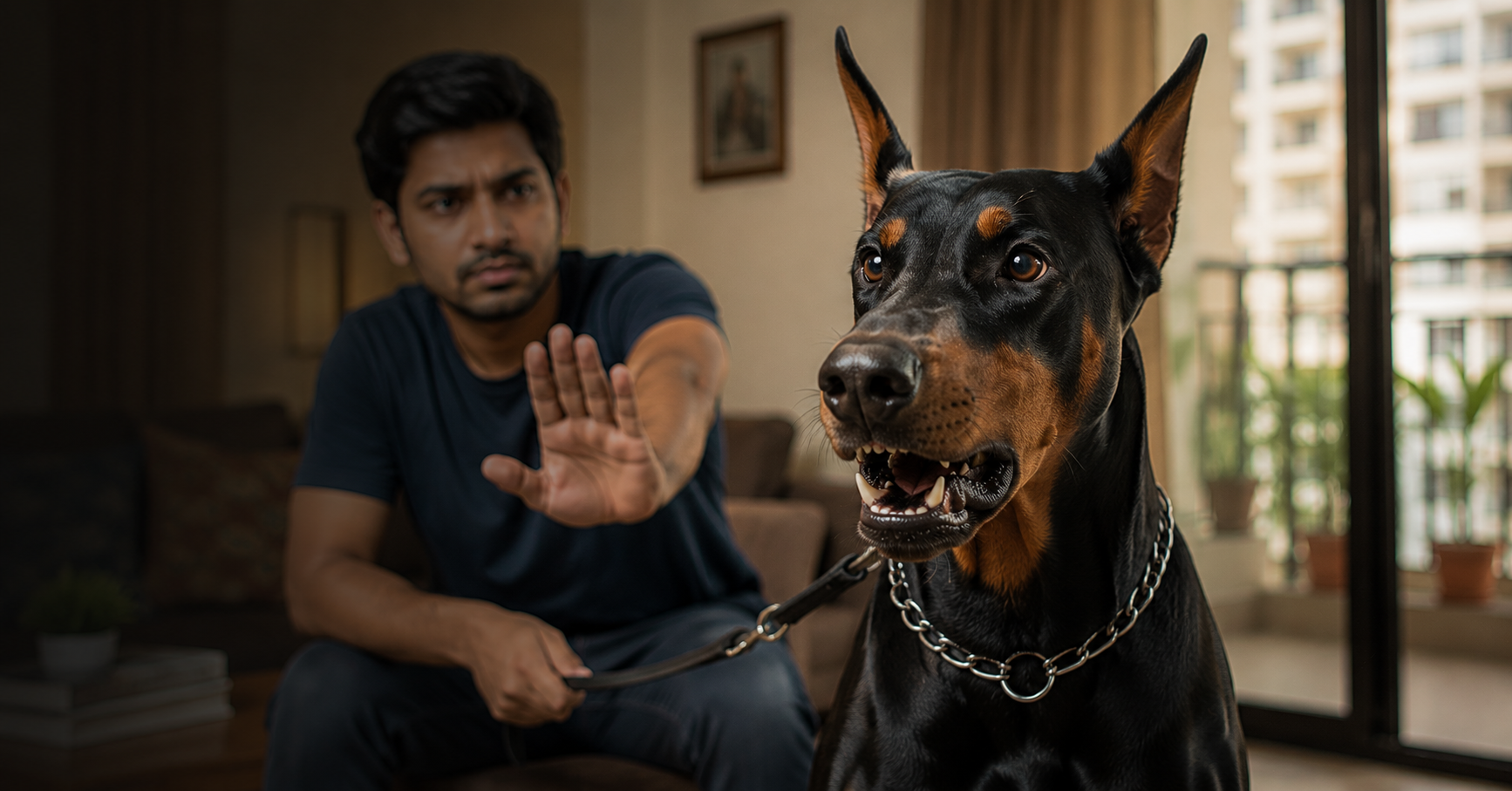
Rohan from Mumbai had a Doberman who barked aggressively at every dog during evening walks near Powai. The man held a strong conviction that his actions had destroyed his dog in some way. The man started his midnight walk because he wanted to stay away from people who might see his situation. The dog learned proper behavior through dog training methods that helped the situation get better.
Your situation exists without any fault coming from your side.
Dogs tend to show more intense reactions when they belong to particular breeds.
However, breed isn’t always the reason. If your dog’s behaviour has changed unexpectedly, it’s worth understanding the possible triggers.
Our Guide:https://petcare360.org/why-is-my-dog-suddenly-aggressive/
The Indian breeds which serve as guards tend to show alarm more quickly than other dog breeds. Your dog does not possess any moral defects. Your dog requires direction together with protected training sessions which focus on their trigger responses.
Most trainers operate under incorrect assumptions about this subject. They work to prevent barking but they fail to address the emotional causes which lead to this behavior.
Top Reasons Your Dog Has Dog-to-dog aggression Problems
One major reason is poor early socialisation. Dogs which fail to establish calm relationships with well-adjusted dogs during their puppyhood will develop social difficulties when they become adults.
Many behaviour problems begin during puppyhood. If your puppy is already showing rough biting or early aggressive behaviour
Read our guide:https://petcare360.org/puppy-biting-how-to-stop-it-before-it-becomes-aggression/
Indian dogs faced complete social isolation during lockdown years because they could not experience their usual human interactions. The current situation shows that the original disaster continues to impact people. Dogs lack proper knowledge about how to behave when they interact with their species members.
The leash creates another problem which leads to owner frustration when they try to control their dog. This surprises many owners. Your dog sees another dog, gets excited or nervous, but the leash prevents movement naturally. The situation creates fast-growing frustration. The situation leads to barking. The dog then lunged at me. My dog started to bark like crazy when he got close to the apartment gates even though he wanted to say hi to the other dogs. Weird, right?
The human brain stores permanent memories which result from severe negative experiences. A single fight between street dogs during puppyhood will cause dogs to behave differently for many months. Indian streets are unpredictable. Loose dogs appear suddenly. Firecrackers burst nearby. Delivery bikes zoom past. Sensitive dogs remember these moments.
The human brain has no full understanding of how heat influences human behavior. The summer season in Mumbai creates a sticky and tiring environment which affects our daily lives. Dogs show decreased patience when they become overheated while flat-coated breeds and heavy dogs including Labradors and Rottweilers display this behavior. Short tempers happen faster outdoors.
Then there’s one reason owners hate hearing. Too many dog park visits. Yes, really.
People believe that dogs develop better obedience and confidence through forced entry into full dog parks. The situation leads to the opposite result. Dogs which become overwhelmed will show reactive behavior after they experience multiple stressful situations. Social media platforms continue to promote dog socialisation as if all dogs should develop affection for every other dog. That’s unrealistic.
Common Mistakes Indian Dog Owners Make With Dog-to-dog aggression
People make their biggest mistake when they start pulling their dog’s leash as soon as they spot another dog in the area. I used to do this too. Your dog notices that tension instantly. The tight leash signals to me that a negative event will occur soon. The situation worsens with each passing moment.
Another common problem happens in apartment societies all the time. Owners force greetings because they feel awkward avoiding people. “Let them meet once,” neighbours say while both dogs stare stiffly at each other near parked scooters. Terrible idea sometimes. Not every dog needs to say hello.
Many owners use forceful methods to punish their dogs when they bark. Yanking chains. Hitting. Screaming. That may stop the noise temporarily, but the emotional stress remains underneath. Next time the reaction often comes back stronger.
And here’s the counter-intuitive part. Constant exposure doesn’t always help. People say, “Just walk him around more dogs daily.” But if your dog keeps reacting repeatedly, you’re rehearsing the bad behaviour again and again. Distance matters more initially.
I honestly think many Indian dog owners wait too long before starting proper dog training because relatives keep saying, “He’ll grow out of it.” Usually, he won’t.
How to Stop Dog-to-dog aggression in Dogs – Step by Step
Step 1: Identify the Distance Trigger
You need to identify your dog’s reaction starting point before you can begin work on their dog aggression issues.
Is it five feet away? Twenty feet? Across the road?
Spend three to four days simply observing. Don’t test your dog intentionally. Just notice patterns during walks. A Doberman in a crowded Mumbai lane may react much earlier than the same dog in a quiet park.
The position of objects between us and them creates unexplainable changes in what we see.
If your dog has already snapped, bitten, or becomes difficult to control during walks, make safety your first priority before starting behaviour training.
Read our guide: https://petcare360.org/how-to-handle-an-aggressive-dog-safely-at-home/
Step 2: Stop Forcing Dog Greetings
Your dog doesn’t need to meet every dog.
My walking experience transformed completely after I learned this one important lesson. My dog became more relaxed because I stopped treating our walks as social events. The ability to stay calm during passing situations holds more value than achieving perfect greetings.
Cross roads if needed. Turn around sometimes. Create space early instead of waiting for chaos. There’s no shame in management.
Neighbours might watch you closely. You should continue to ignore them.
Step 3: Reward Calm Behaviour Fast
Timing matters badly here.
The moment your dog detects another dog in a relaxed state you should give them a reward right away. Tiny chicken pieces work brilliantly. Cheese too, though my dog becomes ridiculously dramatic for paneer.
Keep sessions short. Ten minutes is enough initially.
Don’t wait for silence perfection. Reward calm looking. Reward checking in with you. Small wins matter because dog behaviour changes gradually.
Step 4: Use Structured Walking Routes
Random walks create random reactions.
Choose quieter roads temporarily for two weeks. Early mornings help in Mumbai because fewer dogs crowd the streets then. Avoid apartment entrance bottlenecks during busy evening hours if possible.
Predictability reduces stress.
A calm routine improves dog obedience faster than chaotic exposure every day. I learned this after months of frustrating evening walks near traffic and stray dog groups.
Step 5: Teach Focus Commands Indoors First
Many owners skip this part completely.
If your dog ignores you indoors, outdoor control becomes much harder. Teach simple commands inside your apartment first. Look at me. Sit. Touch command. Short stay exercises.
Practice five minutes twice daily.
But don’t train endlessly. Mental exhaustion creates crankiness too, especially in intelligent breeds like Dobermans or German Shepherds.
Step 6: Manage Your Own Energy
Dogs maintain their ability to read people at all times.
Your dog will notice your panic immediately when you see another dog. Your breathing pattern experiences changes. Your hands form a tight grip while your body shows signs of tension. Your dog reacts faster because you already look worried.
I know this sounds slightly annoying, but calm handling genuinely matters.
Walk slower. Keep shoulders relaxed. Speak less.
The person needs to stop giving excessive apologies during their emotional reactions. The dog receives the owner’s nervousness through its leash connection.
Step 7: Use Better Equipment
The equipment functions as an independent solution which does not solve aggressive behavior problems. Still, they help massively.
A front-clip no-pull harness gives better control without choking your dog during lunges. Good harnesses in India usually cost between Rs. 1,200 and Rs. 3,000 depending on size and quality.
Avoid retractable leashes completely. Honestly, I hate them for reactive dogs.
Safety first. Always.
How Long Does It Take to Fix Dog-to-dog aggression in Dogs?
Progress takes time. Usually more than owners expect.
People will recognize your growing awareness during the first three days of this process. The process of recognizing triggers will become faster for you while you improve your ability to stay away from negative situations. Small improvements count.
The training process needs to continue for one week before dogs start showing reduced reaction intensity when trainers keep their training sessions consistent. The number of times dogs bark explosively might decrease. Dogs seem to recover more quickly after encountering other dogs. The current situation shows that you have already made some progress.
After one month, many dogs become noticeably calmer around controlled triggers. Walks feel less stressful. Focus improves. Dog obedience becomes easier outdoors too. But severe dog aggression towards other dogs can take several months to improve fully, especially if fights or bad experiences happened repeatedly before.
The process includes various challenges which people must face. Totally normal.
Your entire training program will erase after you experience one difficult hike.
Best Dog Behaviour Training Course for Dog-to-dog aggression Problems
These steps work well for most dogs. But some dogs need a more structured programme, especially if the dog attacks other dogs on walks has been going on for weeks or months.
Brain Training for Dogs, created by certified trainer Adrienne Farricelli, targets the root cause of behaviour problems using force-free, science-based methods. Thousands of dog owners have used it successfully.
A structured training approach helps people who work with dogs to control their stress levels while they teach these dogs to handle their aggressive behavior with other dogs. The program offers dog training exercises which help dogs learn better focus skills and emotional control and develop calmer behavior during their walks.
The training process becomes more effective with a no-pull harness which protects dogs from sudden encounters that happen frequently in the busy residential areas of India.
How to cure dog aggression towards other dogs?
Dog aggression toward other dogs cannot be cured quickly, but it can often be improved with proper training. The goal is to reduce reactivity and change your dog’s emotional response using positive reinforcement. Avoid forced interactions, and seek help from a qualified trainer or behaviorist for severe cases.
Will fixing a dog stop aggression towards other dogs?
Neutering a dog may reduce some types of aggression, especially if it is related to hormones, territory, or mating behavior. However, it is not a guaranteed solution. If the aggression is caused by fear, anxiety, or poor socialization, training and behavior modification are usually needed for improvement.
Can dog aggression be cured?
Dog aggression is rarely completely cured, but it can often be significantly improved and managed. The focus is on identifying the root cause such as fear, pain, stress, or possessiveness and using positive reinforcement training to change the dog’s emotional response. Professional guidance is often helpful for safe and lasting progress.
Can aggressiveness be trained out of a dog?
Aggression in dogs can often be reduced and managed with proper training, but it cannot be simply trained out like a command. It is usually linked to emotions such as fear, anxiety, or instinct. The goal is to change how the dog feels about triggers using positive reinforcement and consistent training.
How to fix a really aggressive dog?
Fixing a highly aggressive dog requires professional help and a structured behavior modification plan. A trainer or veterinarian can identify the cause and guide safe training. The focus is on rewarding calm behavior and carefully avoiding triggers while gradually changing the dog’s emotional response over time.
How to stop a dog from attacking another dog?
To stop a dog from attacking another dog, prioritize safety by interrupting the behavior without using physical force. Use barriers, distance, or safe distractions to break their focus. Avoid grabbing collars to prevent injury. After separation, keep the dogs apart and seek help from a qualified trainer to prevent future incidents.