





What Is Puppy biting and Why Does It Happen?
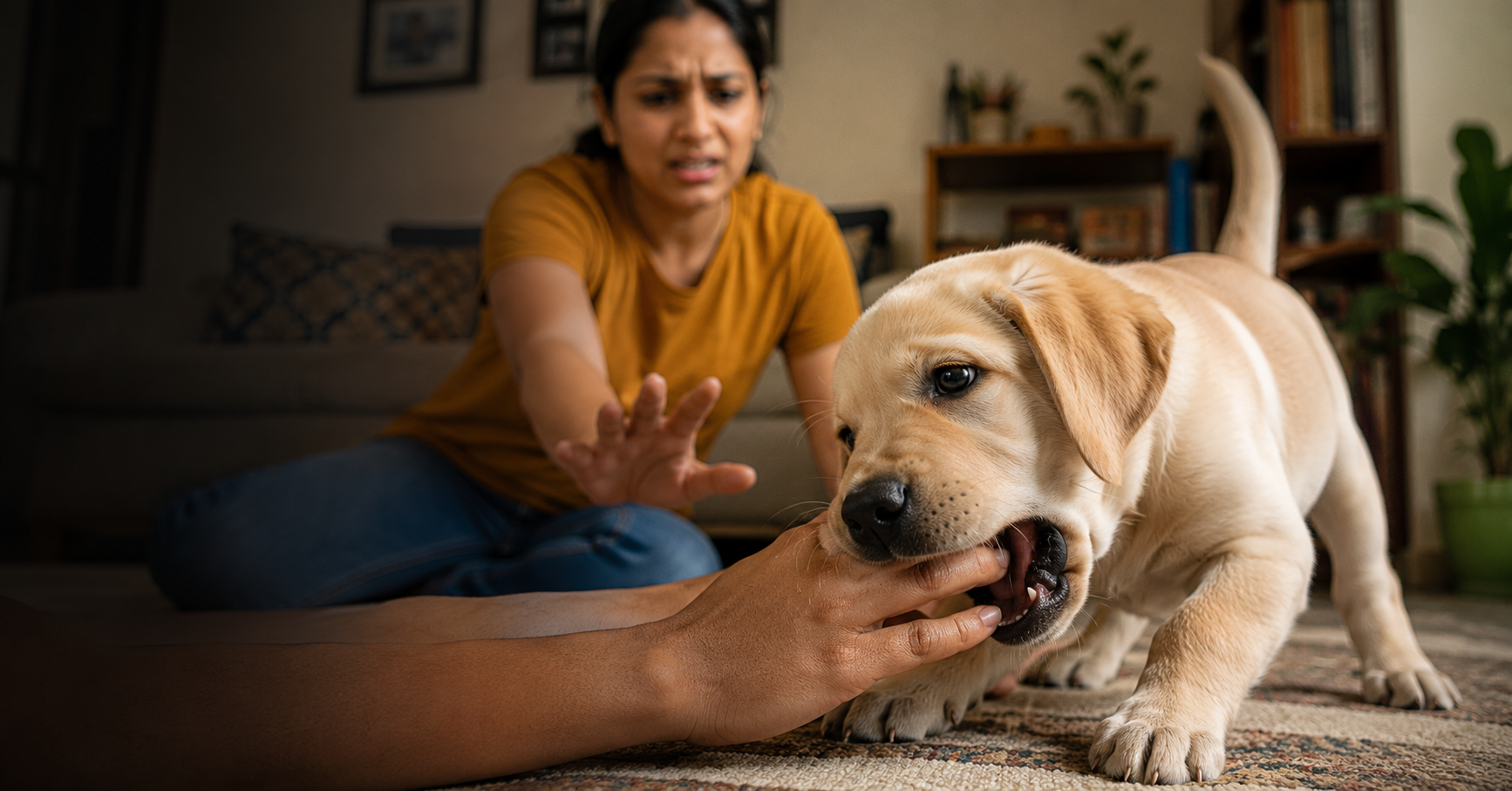
Deepa from Delhi was playing on the floor with her Labrador puppy when suddenly those tiny sharp teeth clamped onto her hand hard enough to draw blood. She yelped. The puppy got even more excited and jumped back for another bite like it was some fun game. She honestly sat there wondering if her puppy was becoming aggressive already. Puppy owners need to understand total control during moments of panic which leads most people to search puppy biting how to stop advice online when their new dog arrives at home.
Puppy biting usually isn’t aggression. Most puppies bite because they explore the world using their mouths. Simple as that. Toddlers handle every object because their lack of understanding prevents them from knowing better. Puppies use their teeth to perform the same behavior. Some bite during teething. The biting behavior appears because dogs feel excited or bored or they become too tired. The small teeth cause more pain to humans than people usually predict.
Is Puppy biting Normal in Indian Dogs?
The situation exists as it normally would. Every puppy owner will experience this situation at some point.
The owners of Delhi apartments and Bangalore flats and Hyderabad homes discovered their dogs had puppy biting problems which they initially thought indicated a medical issue. Indian dog owners experience panic when their dogs bite because they must handle active Labrador and Indie dogs who become excited while inside their homes.
Rohan from Delhi had a Labrador puppy who attacked shoelaces, hands, jeans, and basically anything moving. The man believed he was teaching his dog to be aggressive because his arms needed constant attention for their scratch marks. The puppy showed extreme excitement because it needed comfort for its teething process. This combination occurs frequently.
Apartment dwellers experience higher biting rates from their dogs. The limited space availability prevents dogs from running their usual amount of energy during summer in India when people avoid taking them on long walks. The dog shows its excitement through nipping and jumping and grabbing clothes when it stays inside the flat.
Puppies lack the ability to realize human skin contains sensitive areas which require special care. The training process teaches dogs to understand this environmental rule through their practical training sessions. The learning process encounters various difficulties during its progression.
Top Reasons Your Dog Has Puppy biting Problems
One major reason is teething. Puppies between three and six months chew constantly because their gums feel uncomfortable. Furniture. Fingers. Slippers. Nothing feels safe during this phase. I lost two phone chargers myself years ago. The memory remains painful to me.
The system receives too many inputs which leads to operational failure. Playtime excitement makes puppies bite with more force when they reach their maximum stimulation point. The combination of fast movement with loud voices and children running and playing roughly creates excessive energy levels. The puppy loses all control which results in automatic teeth usage for grabbing.
Lack of sleep causes biting too. This surprises lots of owners. Overtired puppies behave exactly like cranky toddlers. The dogs move rapidly while they fail to respond to dog training commands and their biting behavior intensifies because their brain functions deteriorate which prevents them from handling their emotions properly. Most trainers fail to understand this because they concentrate on physical workouts while they neglect the essential role of rest in training programs.
Indian apartment living adds extra frustration sometimes. The puppies must deal with constant noise from lifts and scooters and their neighbors and pressure cookers and delivery bells throughout the day. Their nervous system stays busy all day. The dog uses biting as a method to express its built-up excitement and stress.
Owners face an unexpected situation which they never guess will happen. Human reactions can accidentally encourage biting. The game of excitement begins for some puppies when their owners start shouting and waving their hands after each bite. Dogs follow any action that produces the quickest positive response from other living beings.
Common Mistakes Indian Dog Owners Make With Puppy biting
The worst error occurs when people strike puppies as punishment for their biting behavior. I understand the frustration. Really. Puppy teeth feel like tiny needles. The typical result of punishment methods creates fear in dogs instead of teaching them proper gentle behavior.
People should avoid treating their hands as playthings when they interact with others. People move their fingers in front of puppies as they play grab games but they expect the puppy to realize when biting hands becomes unacceptable. That confuses dogs massively.
Many Indian dog owners also skip naps because they assume active puppies simply need more exercise. Wrong move. Overtired puppies become absolute land sharks by evening. I learned this the hard way with my own Labrador years ago after surviving nightly ankle attacks around the apartment.
The training method which uses alpha-style dominance to stop puppy biting stands as my most disliked practice. The puppies use their behavior to learn about family roles but they do not plan to manage the family structure. The babies use their behavior to practice how to manage their emotions. The two situations show a major difference between them.
How to Stop Puppy biting in Dogs – Step by Step
Step 1: Identify the Biting Trigger
Observe when the dog shows its strongest biting behavior during these moments.
Puppies show biting behavior during their energetic evening play sessions. The visitors depart while dogs display nip behavior during their playtime and when they become too tired. Spend several days noticing patterns before changing routines randomly.
My Labrador puppy became mouthy exactly around 8 pm every night. Predictable little menace, honestly.
Step 2: Redirect to Appropriate Toys
Always keep chew toys nearby.
The second your puppy bites hands or clothes, calmly redirect toward a bite toy instead. Timing matters hugely here. The process requires you to react immediately because puppies learn to connect their actions with rewards during their first thirty seconds of activity.
Rohan from Delhi started carrying soft rope toys around the apartment constantly. Simple change. Big improvement.
Step 3: End Play Briefly After Hard Bites
Puppies learn through consequences.
If biting becomes too hard, stop interaction immediately for thirty seconds. Stand up calmly. Move away quietly. No yelling needed. Puppies learn through time that their rough biting behavior results in loss of all their play enjoyment.
The process of puppy punishment needs to eliminate all methods which involve confining them to isolation for extended periods. The learning process becomes more effective through brief intervals of rest.
Step 4: Teach Calm Play Indoors
Excitement control matters massively.
Apartment owners should prevent their Labrador puppies from playing aggressive wrestling games because these activities become dangerous when performed in tight apartment spaces. Players should choose calm fetch activities and sniffing games and brief training sessions because these activities prove more effective than wild chasing games which make dogs more likely to bite.
And honestly, calmer play reduced biting faster than endless corrections ever did for my dog.
Step 5: Add Structured Rest Periods
Puppies need shocking amounts of sleep.
Young puppies often require sixteen to eighteen hours of rest daily. The schedule needs to include quiet nap periods which should happen after meals and walks and after intense play activities. The combination of fans and dim lighting and calm rooms allows puppies to settle down better during the hot Delhi afternoons.
Overtired puppies bite harder. Every single time.
Step 6: Practice Gentle Mouth Training
Reward soft behaviour constantly.
You should give your puppy praise and rewards when they show gentle licking or soft mouthing behavior without any force. Puppies require training to understand which actions lead to success instead of focusing on their unsuccessful attempts.
Tiny moments matter here.
Most Indian dog owners concentrate on stopping their dogs from bad behavior instead of giving their dogs constant rewards for peaceful actions.
Step 7: Use Mental Exercise Daily
Mental stimulation tires puppies beautifully.
The combination of short dog obedience exercises with sniffing games and food puzzles and basic training sessions helps reduce the amount of biting energy that dogs develop when they stay indoors. Five-minute sessions work perfectly for young puppies because their focus disappears quickly anyway.
The puppy training process demanded all my mental abilities to maintain my sanity through my puppy training period.
How Long Does It Take to Fix Puppy biting in Dogs?
The process of development occurs through successive stages which move from lower to higher levels.
Your puppy will continue to bite you during the first three days because this behavior has become their default response. That’s normal. You’re building new habits slowly.
Puppies start to show their biting behavior becomes less severe during their first week of life when their mouths develop into softer structures. The process becomes more efficient when they switch their attention to toys at a faster rate. The process of recovery seems to happen at a faster pace when they return to normal after getting excited. Small wins matter a lot here.
The training program for puppy biting stops to produce results when you have trained your dog for one month by following the same set of rules which all family members must follow every day. The teething process continues to cause occasional problems during the period when babies reach their four to six month stage.
Stick with it.
Your puppy probably isn’t aggressive. The dogs show immature behavior because they get too excited while they learn proper excitement management techniques. Big difference there.
Best Dog Behaviour Training Course for Puppy biting Problems
These steps work well for most dogs. But some dogs need a more structured programme, especially if the puppy drawing blood during play has been going on for weeks or months. One programme I genuinely recommend is Brain Training for Dogs, created by certified trainer Adrienne Farricelli. The program employs scientifically proven techniques to solve dog behavior issues by addressing their actual causes without using force or punishment.
Thousands of dog owners have used it successfully for puppy biting, barking, chewing, and impulse control problems. The training process becomes more effective when you use a bite toy because puppies need safe objects to satisfy their natural chewing and teething needs. Some puppies improve slowly. Others suddenly stop turning your hands into chew toys almost overnight. Funny little creatures sometimes.
At what age do puppies stop biting so much
Puppies usually reduce biting between 5 to 8 months of age as they finish teething. However, biting doesn’t stop automatically and needs consistent training. Teaching bite inhibition and redirecting to toys helps ensure this behavior decreases faster.
Can you trust a dog after it bites?
Yes, you can trust a dog after a bite, but it depends on the cause and behavior history. Bites often result from fear, pain, or stress rather than intent to harm. With proper training, behavior assessment, and professional guidance, most dogs can safely regain trust over time.
Why is my puppy biting me so aggressively?
Puppy biting often appears aggressive due to overexcitement, teething, or poor bite control. To stop it, calmly disengage, avoid rough play, and redirect to safe chew toys. Consistent training helps your puppy learn bite inhibition and reduces aggressive mouthing over time.
How do you discipline a puppy who is biting?
To discipline a biting puppy, avoid punishment or physical corrections. Instead, stop interaction immediately when biting starts, stay still, and disengage. Then redirect them to a chew toy and reward calm behavior. Consistent redirection helps your puppy learn bite control and proper play behavior.
How do I get my puppy to stop biting me fast?
To stop a puppy from biting quickly, calmly stop interaction the moment biting starts and ignore them for 10–20 seconds. If it continues, walk away briefly and reset play. Then redirect to a chew toy and reward gentle behavior to teach bite control faster.