






What Is Jumping on visitors and Why Does It Happen?
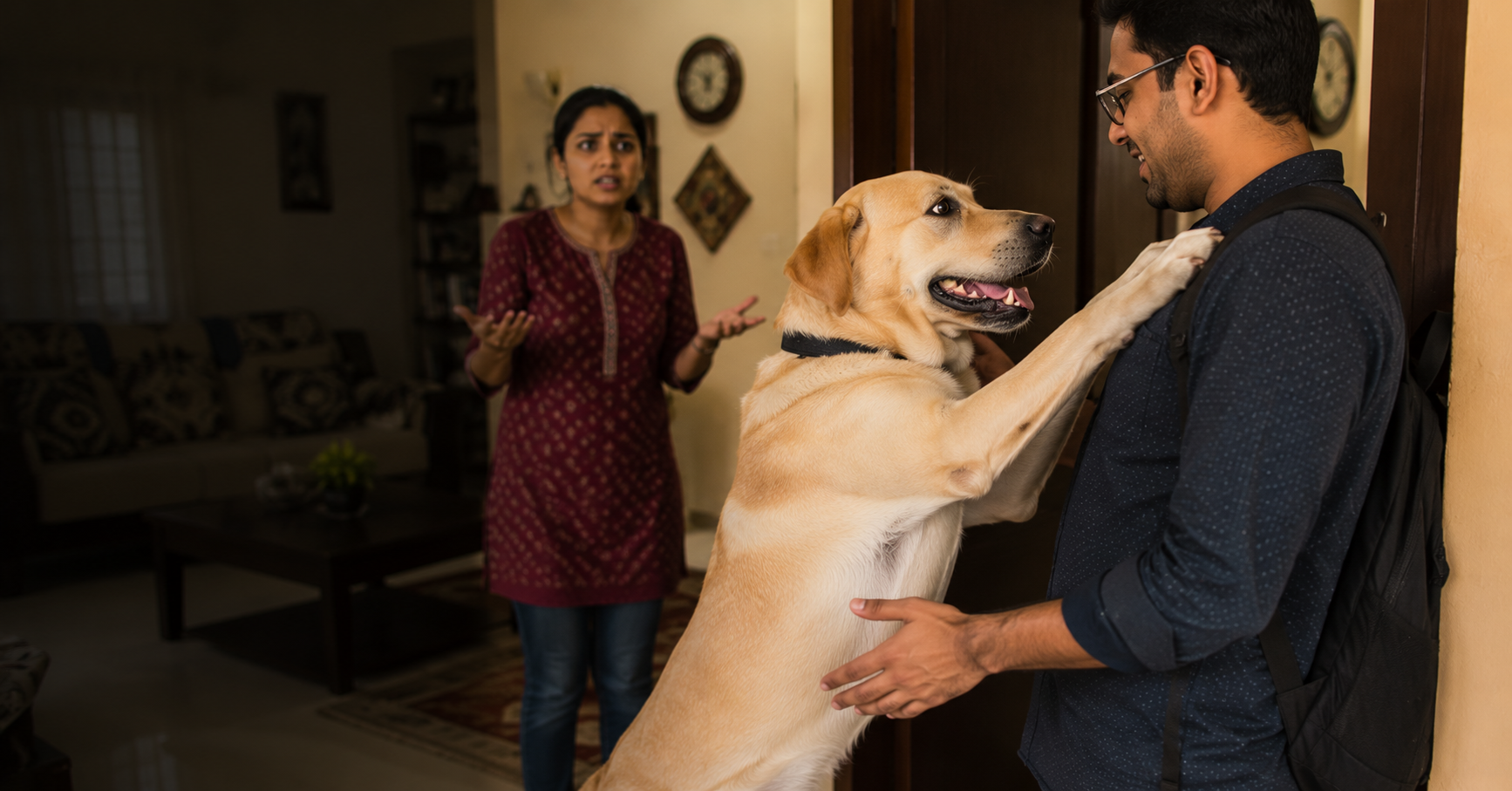
Deepa from Pune opened her apartment door to welcome relatives for dinner, and within two seconds her Labrador launched himself straight onto her uncle’s chest. Tea spilled everywhere. One slipper flew across the hallway. The poor uncle looked genuinely frightened while the dog wagged his tail like he’d just won a medal. That chaos is exactly why so many people search how to stop dog jumping on people, especially in Indian apartments where guests arrive constantly.
Jumping usually happens because dogs get overexcited. They want attention fast. Dogs naturally greet face-to-face, but since we’re taller, they jump upward to reach us. Simple instinct, honestly. Think about a small child excitedly grabbing your arm when visitors arrive. Same emotional energy. Some dogs jump from excitement. Others jump because it works. Guests laugh, touch them, or talk loudly. Boom. Behaviour repeated.
Is Jumping on visitors Normal in Indian Dogs?
Very normal. Almost too normal sometimes.
I’ve seen this behaviour in Pune flats, Hyderabad apartments, and even quiet houses in Kochi where dogs still turned into bouncing kangaroos every time the doorbell rang. Indian dog owners often feel embarrassed about it. They think their dog lacks discipline or proper dog obedience training. Relax a bit. Most dogs go through this stage.
Rohan from Pune had a Labrador who jumped on literally everyone visiting the house, including delivery guys carrying groceries. He thought he was doing something terribly wrong as a dog owner. Turns out his dog was simply overstimulated and had accidentally learned that jumping equals attention.
Apartment life makes it worse too. Visitors become exciting events because dogs spend long hours indoors hearing doorbells, footsteps, and lift noises. Then suddenly someone enters the flat and excitement explodes. Honestly, even calm dogs can lose control in those moments.
And no, your dog isn’t trying to dominate guests. That old theory refuses to die for some reason. Most jumping behaviour comes from excitement, not power struggles.
Top Reasons Your Dog Has Jumping on visitors Problems
One major reason is accidental reward. Guests often encourage jumping without realising it. They laugh. They pet the dog mid-jump. Some even bend down excitedly saying “aww he likes me!” From the dog’s perspective, jumping worked perfectly. Why stop?
Another reason is lack of impulse control practice indoors. Many Indian dog owners focus heavily on walks but skip calm dog training exercises inside the home. Dogs need to learn how to stay emotionally balanced around excitement too, especially Labradors and active breeds who already get overstimulated easily.
Apartment living in cities like Pune adds another layer. Dogs hear doorbells, scooters, neighbours chatting outside, and delivery people arriving constantly. The brain stays alert all day. Then visitors finally enter and excitement bursts out physically through jumping, spinning, or barking.
Here’s the surprising reason most owners miss. Sometimes too much attention causes worse behaviour. Dogs who receive nonstop excitement from family members often struggle to calm themselves when guests arrive. Honestly, most trainers get this completely wrong because they focus only on stopping the jump itself instead of teaching emotional control first.
Indian summers can increase hyper behaviour too. Sounds strange, I know. But dogs stuck indoors during hot afternoons often store extra restless energy. By evening, one guest arriving feels like the biggest event of the day. Chaos follows quickly after that.
Common Mistakes Indian Dog Owners Make With Jumping on visitors
The biggest mistake is yelling “NO” repeatedly while pushing the dog away physically. I tried this myself years ago. Didn’t work. Many dogs actually become more excited because shouting, touching, and movement still feel like attention.
Another common mistake is inconsistency. One family member discourages jumping while another hugs the dog every time paws hit their chest. Dogs can’t understand changing rules. If jumping works even occasionally, the behaviour sticks around stubbornly.
Many Indian dog owners also wait until guests arrive before trying training. That’s already too late. Once your Labrador is racing through the apartment at full excitement level, learning becomes much harder. Training should happen before the doorbell chaos starts.
But the mistake that frustrates me most is forcing nervous guests to “just ignore it”. Not everyone likes large dogs jumping on them. Elderly relatives, children, and visitors carrying bags can genuinely get hurt. Ignoring guests’ discomfort usually creates awkward tension for everyone involved.
How to Stop Jumping on visitors in Dogs – Step by Step
Step 1: Identify the Excitement Trigger
Watch closely before changing behaviour.
Some dogs react to the doorbell. Others explode the second someone unlocks the front gate. A few start bouncing simply from hearing voices outside the flat. Spend several days observing exactly when excitement begins.
My own Labrador reacted before guests even entered. Smart idiot, honestly.
Step 2: Stop Rewarding the Jump
This step changes everything.
The moment your dog jumps, all attention stops immediately. No eye contact. No touching. No talking. Guests should turn slightly sideways and stay boring until paws return to the floor. Then calm attention can happen.
Timing matters a lot here.
If attention arrives while the dog is mid-jump, even accidentally, the behaviour strengthens again. Dogs learn incredibly fast when rewards stay consistent.
Step 3: Teach an Alternate Behaviour
Dogs need something else to do.
Ask your dog to “sit” before greeting people. Practice this daily without visitors first. Then slowly add distractions like family members entering the room or ringing the bell. Reward calm sitting heavily with treats or praise.
Rohan from Pune practised doorway sits with his Labrador for two weeks before involving real guests. Huge improvement after that.
Step 4: Control the Environment First
Management helps more than people admit.
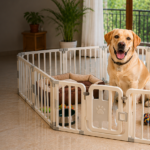
Use a leash indoors during visitor practice initially. Not forever. Just temporarily while building new habits. This prevents your dog rehearsing bad behaviour repeatedly. In smaller Indian apartments, even baby gates or short hallway barriers help create calmer greetings.
And honestly, preventing mistakes speeds up learning faster than constant correction.
Step 5: Burn Energy Before Guests Arrive
A restless dog struggles to stay calm.
Take walks earlier. Play scent games indoors. Practice short dog obedience drills before visitors arrive. Ten minutes of focused dog training often reduces excitement levels massively.
Mental exercise matters too. Puzzle toys or sniffing games tire dogs more effectively than endless running around sometimes.
Step 6: Practice Calm Greetings Daily
Don’t wait for real guests.
Use family members for practice sessions every evening. One person exits the apartment, rings the bell, then re-enters calmly while the dog practises sitting. Repeat several times daily for short periods.
This feels repetitive initially. That’s normal.
Dogs learn through repetition, especially high-energy greeting behaviours they’ve practised for months already.
Step 7: Stay Calm Yourself
Dogs copy our emotional energy constantly.
If you become stressed every time the bell rings, your dog notices immediately. Move calmly. Speak normally. Avoid frantic grabbing or shouting. Calm humans help create calmer dogs.
But don’t expect perfection instantly either. Excited greetings improve gradually, not overnight.
How Long Does It Take to Fix Jumping on visitors in Dogs?
Depends on consistency more than anything else.
During the first three days, your dog may still jump constantly because the old habit feels automatic. That’s completely normal. You’re introducing new patterns slowly.
By the first week, many dogs begin pausing briefly before jumping. Tiny progress matters. Maybe they sit once before bouncing again. Still improvement.
After one month of regular practice, most dogs greet visitors much more calmly if everyone followed the same rules consistently. Severe excitement problems or highly energetic breeds may take longer though, especially dogs who’ve been rewarded for jumping since puppyhood.
Stick with it.
Your dog isn’t trying to embarrass you. They’re just emotionally overexcited and haven’t learned calmer greetings yet. Big difference there.
Best Dog Behaviour Training Course for Jumping on visitors Problems
These steps work well for most dogs. But some dogs need a more structured programme, especially if the dog knocking over guests has been going on for weeks or months. One programme I genuinely recommend is Brain Training for Dogs, created by certified trainer Adrienne Farricelli. It focuses on the root cause of dog behaviour problems using force-free, science-based methods instead of punishment.
Thousands of dog owners have used it successfully for jumping, barking, pulling, and impulse control issues. Using training treats alongside the training can also make a real difference because rewarding calm behaviour consistently speeds up learning for most dogs. Some Labradors improve surprisingly fast once they finally understand what behaviour actually earns attention.
How to train a dog not to jump on guests?
To stop a dog from jumping on guests, ignore the jumping behavior and avoid giving attention until all four paws are on the ground. Teach an alternative behavior like “sit” and reward calm greetings consistently. Ask guests to stay calm and only interact when your dog is settled to reinforce good manners.
How do I stop my dog from going crazy when guests come over?
To stop your dog from going crazy when guests arrive, prevent door-charging by using a leash before visitors enter. Teach a “place” or “go to bed” command and reward calm behavior. Instruct guests to ignore your dog until they are settled, as attention during excitement can reinforce the behavior.
Is it rude to let your dog jump on people?
Yes, allowing a dog to jump on people is generally considered rude and unsafe, even if the dog is friendly. It can startle guests, scratch clothing, or cause people especially children or elderly to lose balance. While it may seem cute in puppies, it often becomes a bigger behavioral problem as the dog grows, so training calm greetings is important.
Can dogs be trained not to jump on people?
Yes, dogs can be trained not to jump on people with consistent practice. Ignore jumping and only give attention when all four paws are on the ground. Teach and reward an alternative behavior like “sit” for greetings so your dog learns that calm behavior brings attention and rewards.
How do you discipline a dog that jumps on you?
To stop a dog from jumping, ignore the behavior completely no eye contact, talk, or touch. The moment all four paws are on the ground, reward calm behavior with praise or a treat. This teaches your dog that staying calm and grounded is the only way to get attention.