






What Is Barking at strangers and Why Does It Happen?
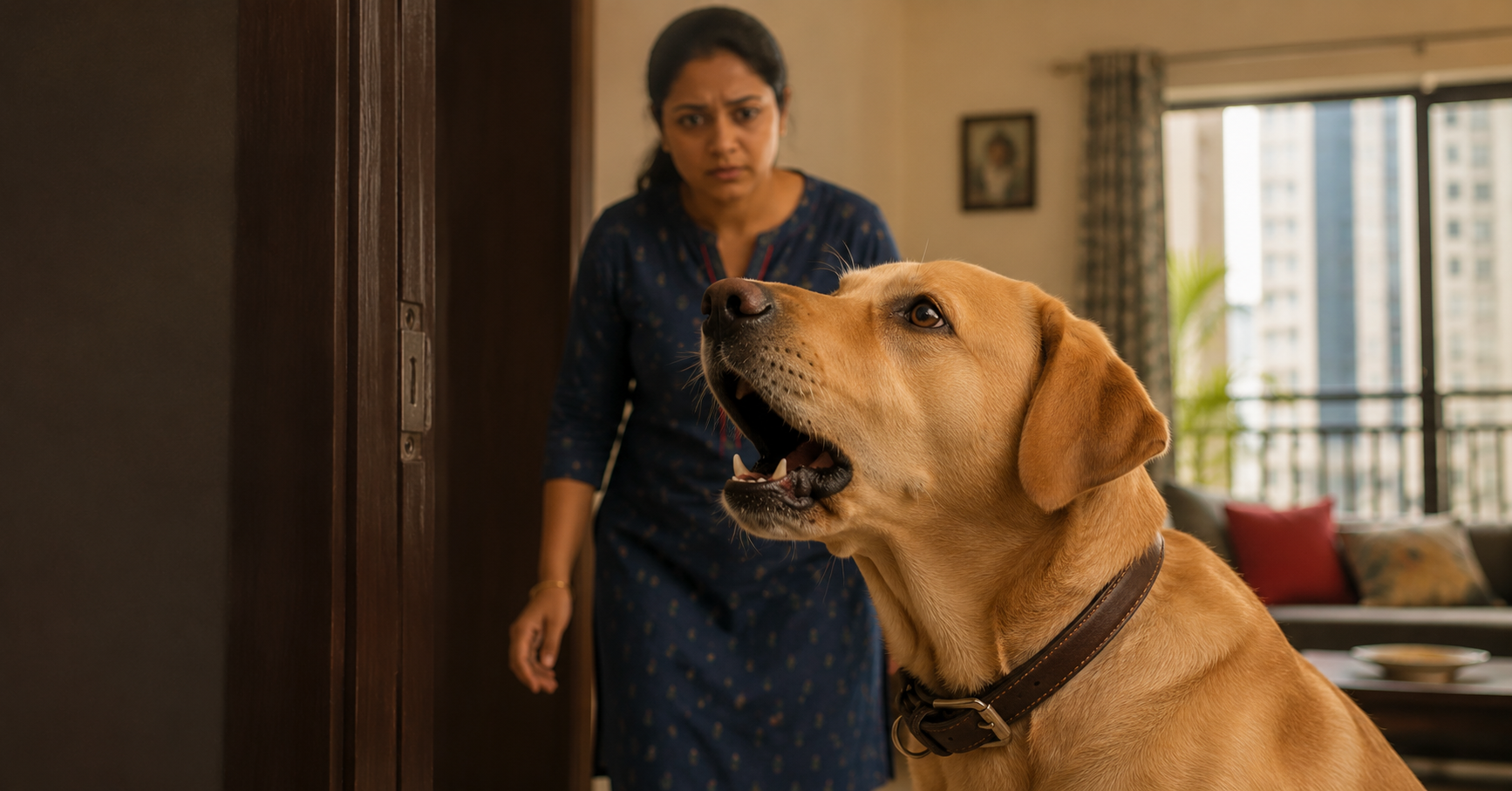
The doorbell rang at 8:30 pm. Again. A delivery guy stood outside the flat in Mumbai while the Labrador inside completely lost it. Barking. Jumping. Scratching the door like a security guard on overtime. The neighbours upstairs banged the ceiling. The owner looked embarrassed. Sound familiar?
If you’re trying to stop dog barking at strangers, you’re definitely not alone. Most dogs aren’t barking because they’re “bad”. They’re reacting. That’s all. Some dogs feel scared. Others get overexcited. A few honestly think they’re protecting you from every Zomato rider who appears near the gate. Bit dramatic, I know.
Think of it like an over-sensitive car alarm. A tiny trigger, huge response. Your dog sees a stranger, hears footsteps in the corridor, or notices someone entering the lift area, and the brain goes into alert mode instantly.
Is Barking at strangers Normal in Indian Dogs?
Yes. Very normal.
Especially for Indian dog owners living in flats and apartments where strangers constantly pass the front door. Mumbai apartments are noisy already. Lifts open every few minutes. Kids run through hallways. Security guards chat outside. Dogs hear everything.
Many owners quietly blame themselves. They think they failed at dog training somehow. That’s usually not true. Some breeds are naturally more alert, including Labradors, German Shepherds, Indies, and even Beagles. And Indian apartment life can make reactive barking worse because dogs don’t get enough calm space during the day.
Rohan from Mumbai had a Labrador named Bruno who barked at literally every visitor. Friends stopped coming over. His mother started apologising to neighbours almost daily. Rohan thought he was doing something wrong during dog obedience training. Turns out, Bruno was just overstimulated and confused about who actually mattered inside the home.
Honestly, once Rohan changed a few routines, the barking reduced a lot within weeks. Not overnight though. That’s the part Instagram trainers never mention.
Top Reasons Your Dog Has Barking at strangers Problems
Fear is probably the biggest reason. Most barking looks aggressive, but underneath it, many dogs are nervous. Your dog sees a stranger entering your space and thinks, “I need to handle this situation myself.” Small apartment dogs often bark more loudly because they feel trapped with nowhere to move away. Funny how that works, right?
Another reason is accidental reward. This surprises many Indian dog owners. Your dog barks at the door. The stranger eventually leaves. Your dog thinks the barking worked. So next time, the brain repeats the same behaviour even faster. Dogs learn from outcomes, not intentions.
Sometimes boredom plays a huge role too. Indian summers can make walks shorter and less active. A dog stuck indoors most of the day often becomes hyper-alert to tiny sounds outside the flat. One footstep near the corridor suddenly becomes tonight’s entertainment.
But here’s the counter-intuitive part. Too much obedience training can actually increase barking in some dogs. People constantly force dogs to “sit”, “stay”, and “quiet” around triggers without teaching emotional calmness first. The dog obeys for five seconds, then explodes again internally. Honestly, most trainers get this completely wrong.
Certain Indian breeds also stay naturally watchful. Indies and Rajapalayams, for example, were bred to notice movement quickly. That alertness isn’t bad. It just needs direction before it becomes exhausting for everyone in the building.
Common Mistakes Indian Dog Owners Make With Barking at strangers
One mistake is shouting back. I did this myself years ago with my first dog. You yell “NO!” while the dog is barking, but your dog often thinks you’re joining the noise. The energy inside the room becomes even more intense. Then the barking gets louder. Brilliant cycle, honestly.
Another common issue is forcing interaction. Guests arrive and immediately try touching the dog. Owners say things like “He’s friendly, don’t worry.” Meanwhile the dog is already uncomfortable. Many dogs need distance first. Especially dogs living in crowded Indian apartments where personal space barely exists anyway.
People also reward barking accidentally without realising it. A dog barks at the door, then gets picked up, hugged, or fed treats randomly just to calm down. The timing matters. Dogs connect actions very quickly.
And here’s the mistake most owners believe is correct. Constantly saying “quiet” doesn’t teach calm behaviour. It only teaches your dog that the word appears during chaos. Big difference there.
How to Stop Barking at strangers in Dogs, Step by Step
Step 1: Identify the Real Trigger
Watch carefully for three days.
Is your dog barking at the doorbell? Footsteps outside? Men wearing helmets? Visitors entering the living room? Many owners think their dog hates strangers generally, but the trigger is often very specific.
My neighbour’s Labrador barked only when people entered quickly through the front door. Slow entries were completely fine. Strange little detail. But important.
Once you know the exact trigger, dog training becomes easier because you’re solving one problem instead of ten mixed together.
Step 2: Reduce Visual Access
Dogs rehearse barking daily. Every repetition strengthens the habit.
Close balcony access during peak evening movement. Use curtains near windows facing corridors. In Mumbai apartments, dogs spend hours monitoring people through grills and balcony gaps. Their nervous system never fully relaxes.
This doesn’t mean isolating your dog. You’re simply reducing unnecessary stimulation while teaching better dog behaviour slowly.
And yes, this works surprisingly well for many dogs within one week.
Step 3: Teach Calm Before Visitors Arrive
Don’t wait for barking to happen.
Practice calm behaviour during quiet hours first. Ask your dog to settle on a mat while nothing exciting is happening. Reward relaxed breathing, softer body posture, and silence.
Most owners only train during chaos. That’s too late.
Spend 10 minutes twice daily teaching your dog that lying calmly earns rewards. Tiny chicken pieces work brilliantly. Paneer too, honestly, if your dog likes it.
Then slowly add low-level distractions like knocking sounds or lift noises from your phone.
Step 4: Stop Rewarding the Barking
Timing changes everything.
If your dog barks and immediately gets attention, eye contact, touching, or frantic talking, the behaviour often continues. Instead, reward the first moment of calm. Even two seconds matters initially.
A lot of Indian dog owners accidentally create a cycle where barking becomes the fastest way to get engagement.
Here’s what helped me personally. The second my dog paused barking, I quietly marked the silence with “good” and offered a treat near his bed. Calmness became valuable over time.
Not instant magic. But real progress.
Step 5: Use Controlled Visitor Practice
Random practice won’t help much.
Ask a friend or neighbour to help for 15 minutes. The person rings the bell calmly, enters slowly, ignores the dog completely, then sits down quietly. Your job is rewarding calm moments before barking escalates fully.
Distance matters here. Some dogs can’t learn if strangers stand too close immediately.
Rohan from Mumbai practiced this with his cousin three evenings a week. By week three, Bruno stopped charging the front door completely. He still barked once or twice, but the panic disappeared.
That’s realistic improvement.
Step 6: Increase Mental Exercise Daily
A mentally tired dog reacts less.
Physical walks alone aren’t enough for many breeds. Labradors especially need brain work. Sniffing games, food puzzles, basic search games inside the house, and short obedience sessions help release nervous energy properly.
Indian summers make long outdoor walks difficult sometimes. So indoor enrichment becomes even more important.
Even 20 minutes of focused mental activity can reduce evening barking noticeably.
Step 7: Stay Consistent for One Full Month
Most owners quit too early.
They try something for four days, see partial barking, then assume nothing works. But dog behaviour changes through repetition. Calm repetition.
Your dog has probably practiced barking at strangers for months. Maybe years. Expecting silence in three days isn’t realistic.
But small wins appear faster than you think. One less barking episode. Faster recovery after the doorbell. Softer reactions around guests. Those signs matter.
How Long Does It Take to Fix Barking at strangers in Dogs?
Usually, the first three days feel messy. Your dog may still bark loudly because the old habit is strong. That’s normal. Don’t panic and change methods every night.
By the first week, many dogs start recovering faster after barking episodes. Instead of barking for five minutes, maybe they stop within one minute. That’s progress, even if it feels small.
Around the one-month mark, consistent dog training usually creates noticeable behavioural change. Visitors become less dramatic. Doorbell reactions soften. Your dog starts looking to you for guidance instead of handling everything alone.
Some dogs improve faster. Others take longer, especially rescue dogs or highly anxious breeds. But steady improvement matters more than perfection. Always.
Best Dog Behaviour Training Course for Barking at strangers Problems
These steps work well for most dogs. But some dogs need a more structured programme, especially if the barking at every visitor has been going on for weeks or months.
Brain Training for Dogs, created by Adrienne Farricelli, targets the root cause of behaviour problems using force-free, science-based methods. Thousands of dog owners have used it successfully.
Using a calming spray alongside the training can also make a real difference, especially for dogs living in busy Indian apartments where strangers constantly come and go. But patience matters too. Your dog isn’t trying to annoy you. They’re trying to feel safe
How do I make my dog stop barking at strangers?
To stop a dog from barking at strangers, use gradual socialization by exposing them to new people in a calm, controlled way. Reward quiet and calm behavior with treats or praise. Consistent positive experiences help your dog feel safe and reduce reactive barking over time.
What really stops dogs from barking?
To stop a dog from barking, reward quiet behavior instead of barking by giving treats or attention the moment they become silent. Gradually increase the time they must stay quiet before getting rewarded. This teaches your dog that calm behavior is what gets attention and rewards.
What sound do dogs hate to stop barking?
Dogs are often sensitive to high-pitched or sudden sounds like sirens, vacuum cleaners, and ultrasonic tones. These can interrupt barking, but they should be used carefully. Positive reinforcement training is a safer and more effective long-term way to stop excessive barking.
What dog breeds bark the most?
Dog breeds that tend to bark the most include Beagles, Terriers, and Chihuahuas. These breeds are naturally alert, energetic, or bred for hunting and guarding, which makes them more vocal compared to other dogs. Proper training can help reduce excessive barking in any breed.
What is the most effective way to stop a dog from barking at others?
The most effective way to stop a dog from barking at others is counter-conditioning—rewarding your dog with treats when they see triggers at a safe distance without barking. Gradually reduce the distance over time. This helps change their emotional response and builds calm behavior around other dogs or people.